Joint movement terms are used to describe the movements permitted at each individual joint of the body. All the moves that the human body can perform are carried out by a combination of these individual movements.
Joint movement terms are often used when describing the biomechanics of a particular gym exercise, such as to explain which joint movements are happening during a bicep curl, and are usually paired with their opposing movement, meaning that, for example, the term for bending the elbow is paired with the term for straightening the elbow.
The joint movement terms covered at Level 2 are:
Flexion and Extension
Flexion refers to bending a particular joint so that its angle is reduced, and extension refers to increasing the angle of a joint.
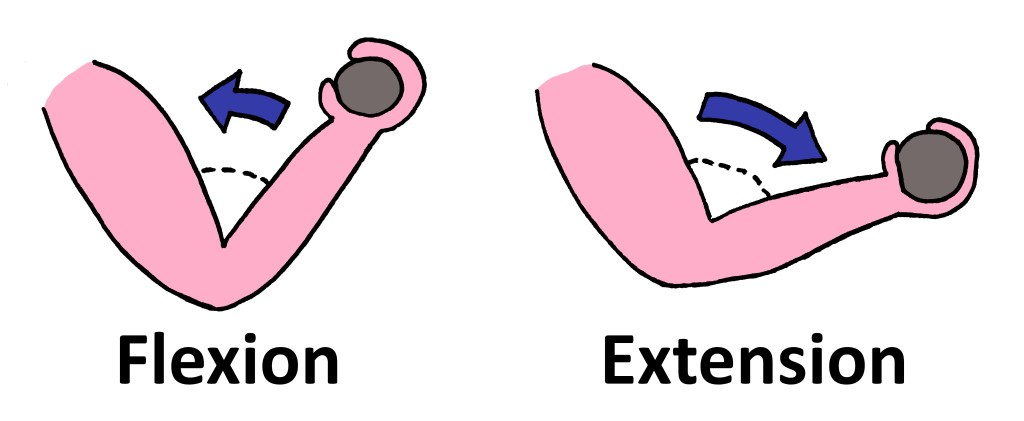
Therefore, elbow flexion means to bend your elbow and elbow extension means to straighten it out.
Example Move: in a bicep curl you perform elbow flexion when you lift the weight and elbow extension when you lower it.
Remember It: when you show off your biceps by contracting them you are flexing your muscles.
Points to Bear in Mind Regarding Flexion and Extension
Whereas flexion and extension are easy to understand in relation to the elbow or knee, they get more complicated when used in relation to other joints such as the shoulders or hips.
The key thing to remember is that flexion refers to a reduction in the joint angle and extension refers to an increase in the joint angle.
However, you also need to know where this angle should be measured in particular joints.
In shoulder flexion and extension, the angle is that between the arm and the head, meaning that shoulder flexion refers to bringing your arm upwards, such as in a front raise, with lowering your arms being shoulder extension.
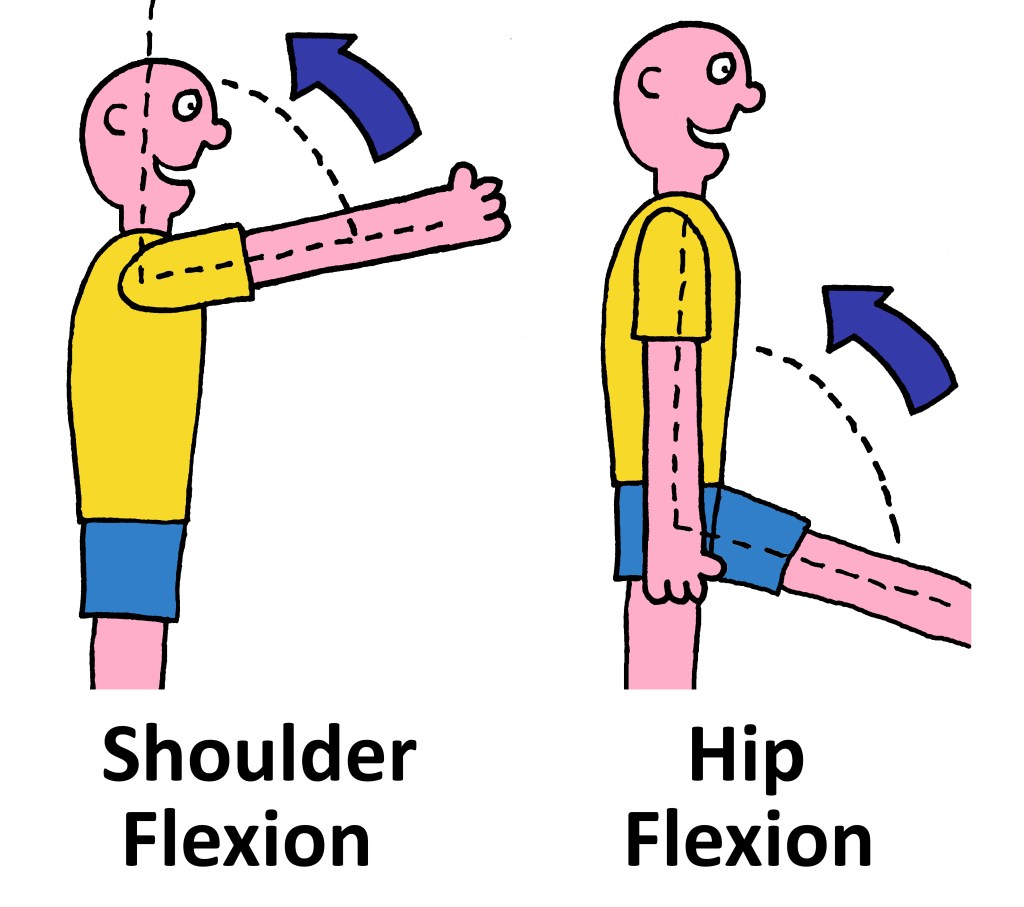
In hip flexion and extension, the angle is that between the leg and the torso, meaning that hip flexion refers to raising your leg, such as in a hanging leg raise, and lowering your legs is hip extension. (Moves involving the arms or legs being raised to the side of the body have different terms, and are covered later.)
Horizontal Flexion and Horizontal Extension
Horizontal flexion is where parts of the body such as the arms are brought together whilst remaining horizontal, and horizontal extension involves taking them further away from each other whilst still keeping them level. This differs from flexion and extension, as they involve going up and down rather than across.
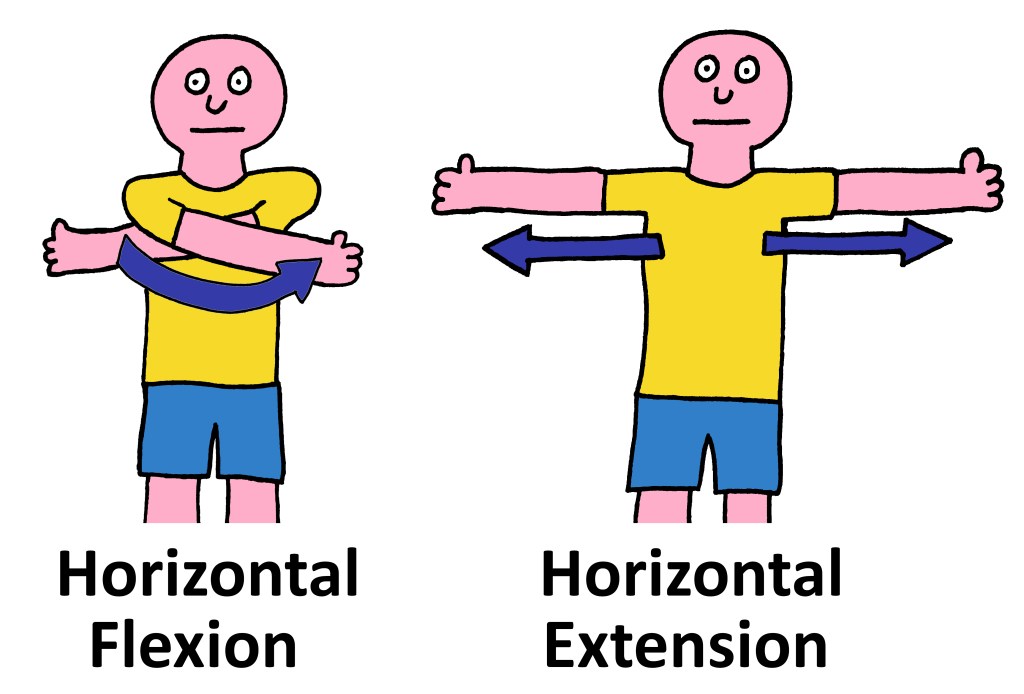
Example Move: in a standing cable flye you are performing horizontal flexion as you pull your arms across your chest, and horizontal extension as you return your arms out to your sides.
Lateral Flexion and Lateral Extension
Lateral flexion means bending to the side, or moving the torso away from the body’s centre line.
Lateral extension means moving the torso back towards the centre line, or straightening up the body.
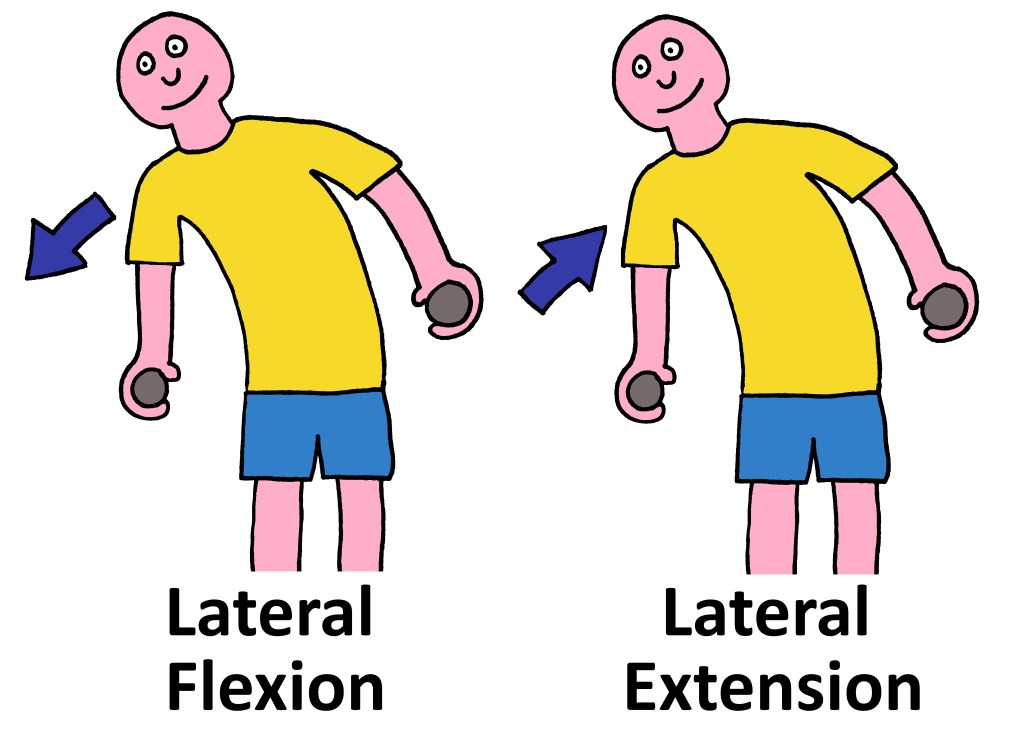
Example Move: side bends see you alternate between lateral flexion, as you bend to the side, and lateral extension, as you then straighten your body up.
Elevation and Depression
Elevation means to lift or raise a joint and depression means to lower it.
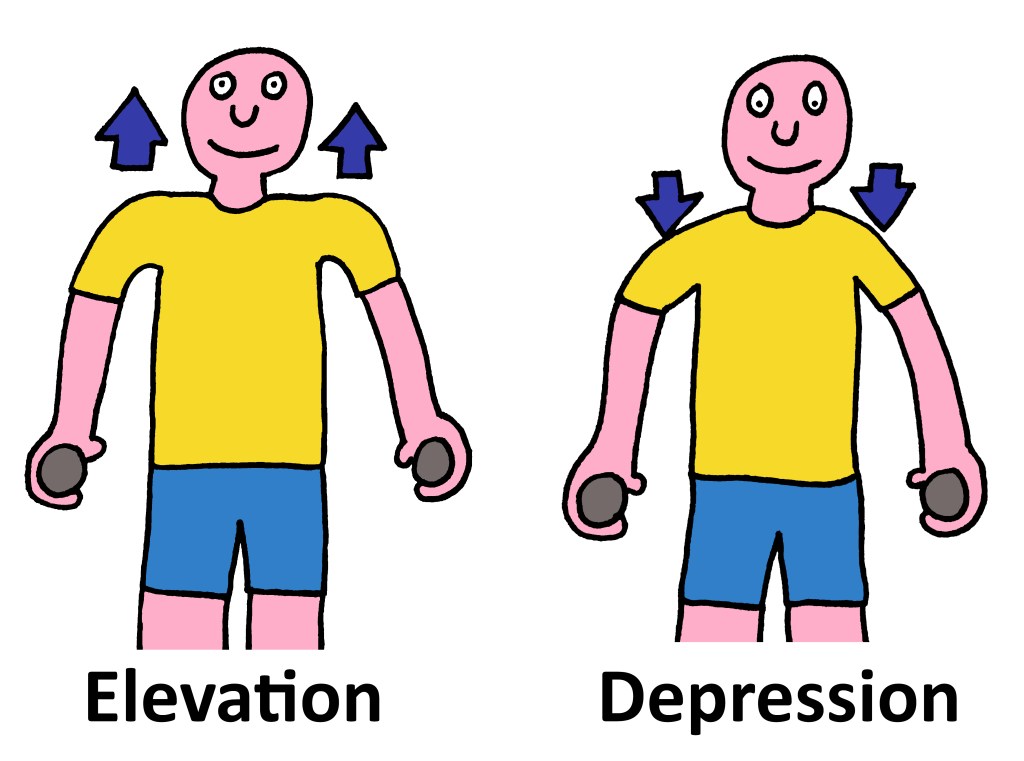
Example Move: when performing shrugs you are elevating and depressing the shoulder girdle.
Remember It: Elevators take you higher and depression makes you feel down.
Protraction and Retraction
These both refer to the shoulder girdle: bringing the shoulders forward is protraction and pulling them back is retraction.

Example Move: when you pull back your shoulders before a deadlift you are performing retraction.
Remember It: think of how ‘retracting a statement’ means to take it back or withdraw it, which is also what you’re doing with the shoulders.
Circumduction
Circumduction means to rotate a part of the body such as the arms or legs.
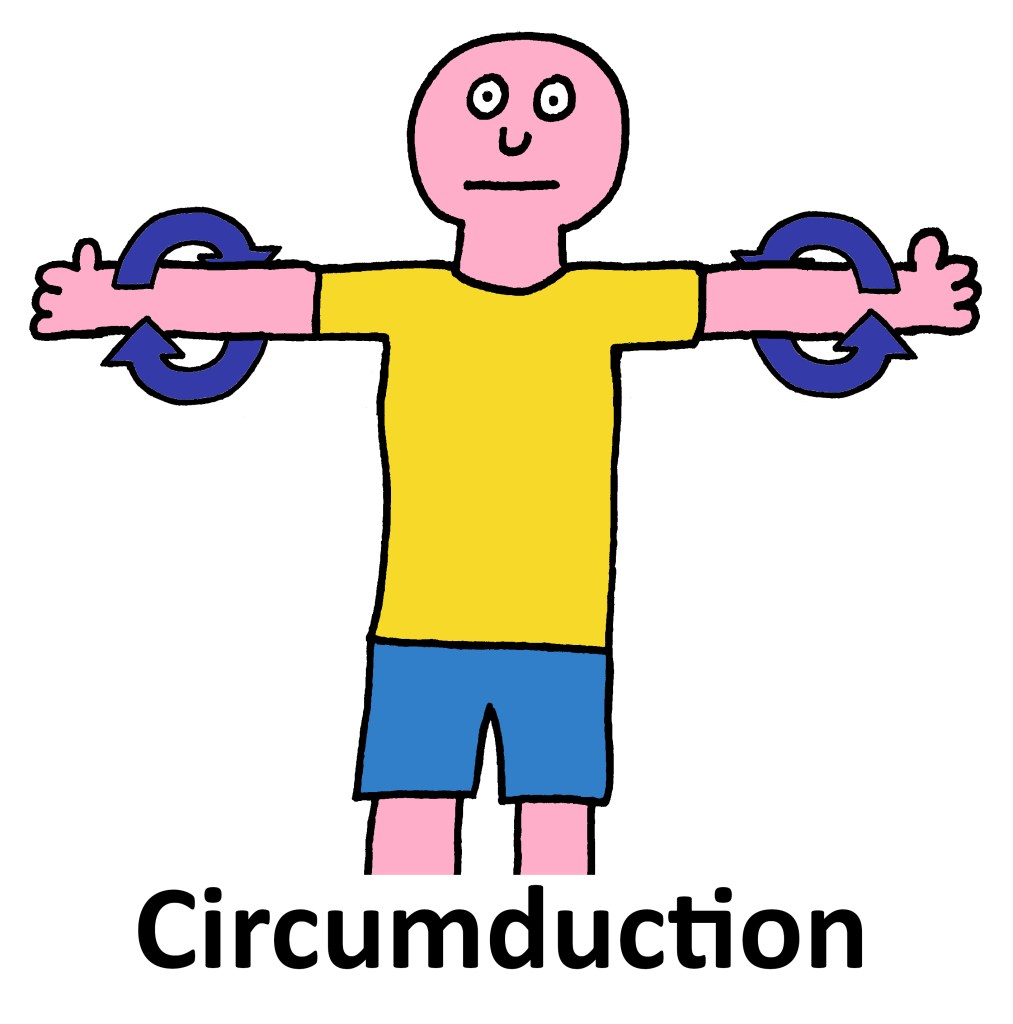
Example Move: performing arm rotations as part of a warm up.
Remember It: Circumduction is where you move your arms in circles.
Rotation
Rotation means to turn (or rotate) the torso around the body’s centre line.
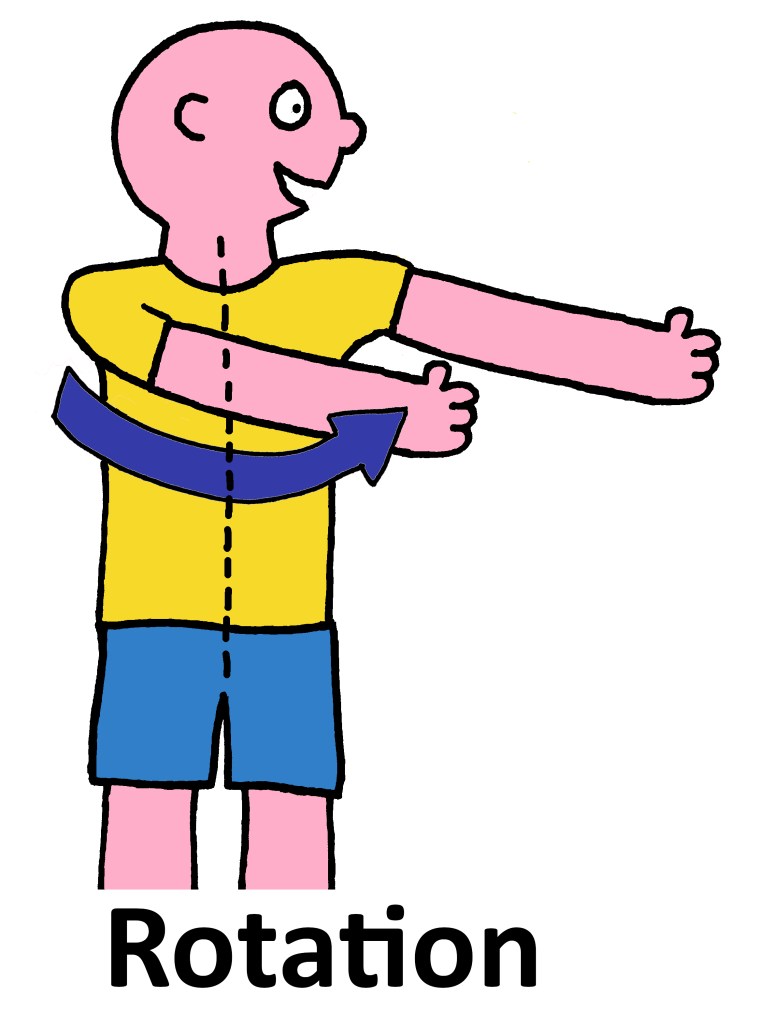
Example Move: baseball swings employ rotation as you are turning from side to side as if rotating on your spine.
Internal and External Rotation
Internal rotation refers to turning the shoulder joint or hip joint towards the body’s centre line and external rotation refers to turning them away from it.
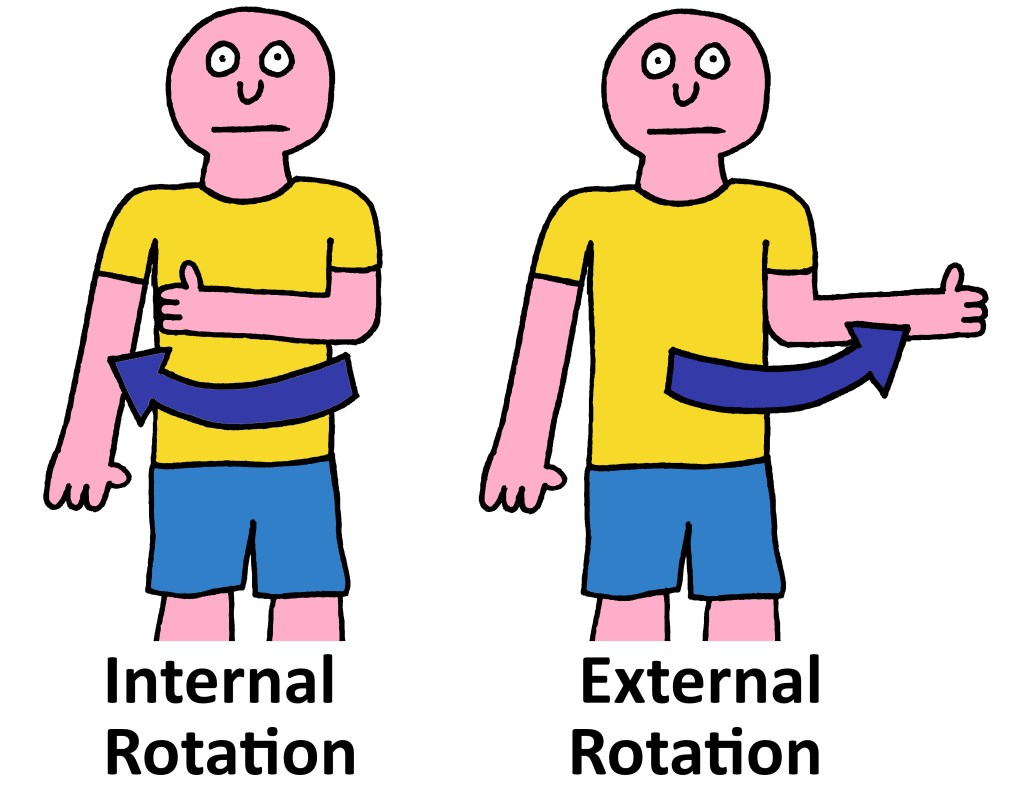
Example Move: rotator cuff rehabilitation exercises using resistance bands often involve internal and external rotation.
Abduction and Adduction
Abduction means to move part of the body such as a limb away from the body’s centre line to your side and adduction means to bring something closer to the body’s centre line.

Example Moves: leg abduction and adduction machines involve moving the leg further from or closer to the centre line, and a lateral raise involves moving the arms away from the centre line.
Remember It: to ‘abduct’ means to take away (as in a kidnapping) whereas in adduction you are ‘adding’ something to the centre of the body.
Pronation and Supination
Pronation means to have the palms turned down and supination means to have the palms facing upwards.
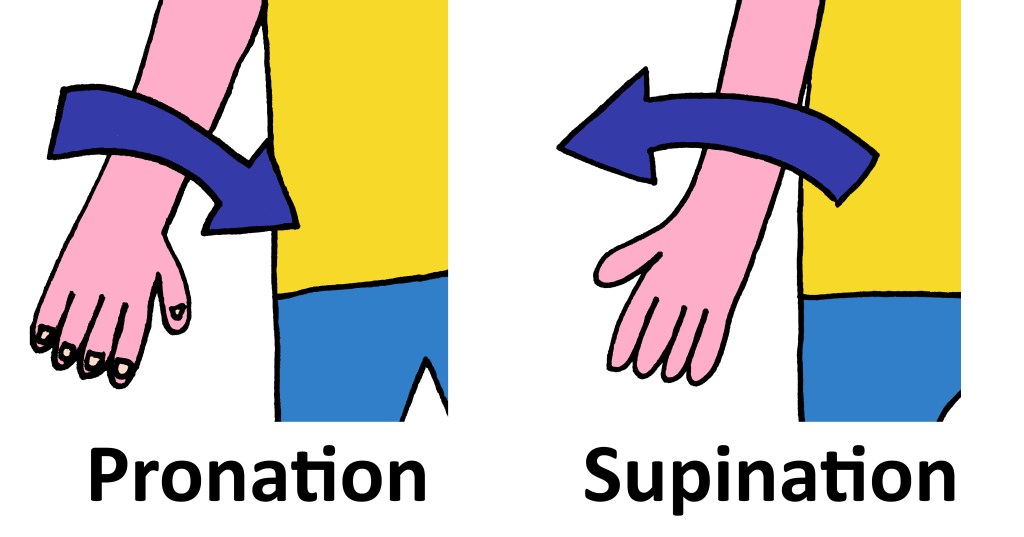
Example Move: in a Zottman curl you lift the dumbbells using a supinated grip then change to a pronated grip at the top before you lower them.
Plantar Flexion and Dorsiflexion
Plantar flexion means to point the toes away from the body, and dorsiflexion means to bring the toes closer to the shin. These moves involve flexing the ankle joint.
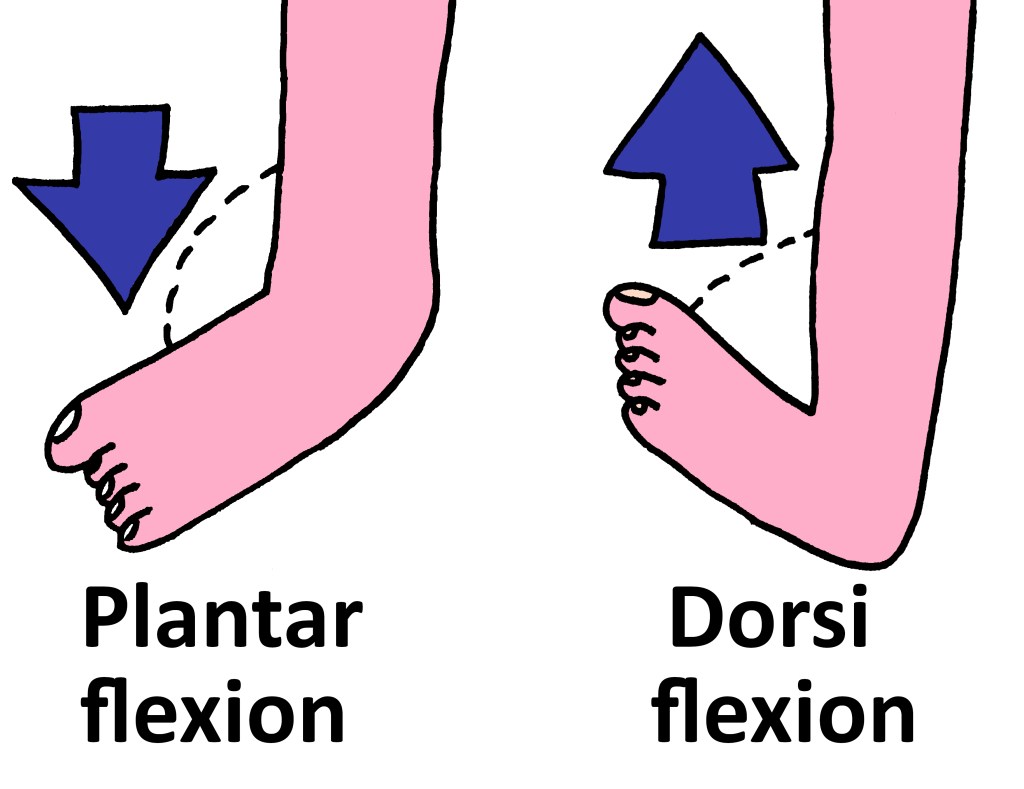
Example Move: in a calf raise you are performing plantar flexion as you stand on your toes to raise your body off the ground.
Remember It: P – in Plantar flexion you Point your toes.
Inversion and Eversion
Inversion means to turn the foot inwards and eversion means to turn the foot outwards.
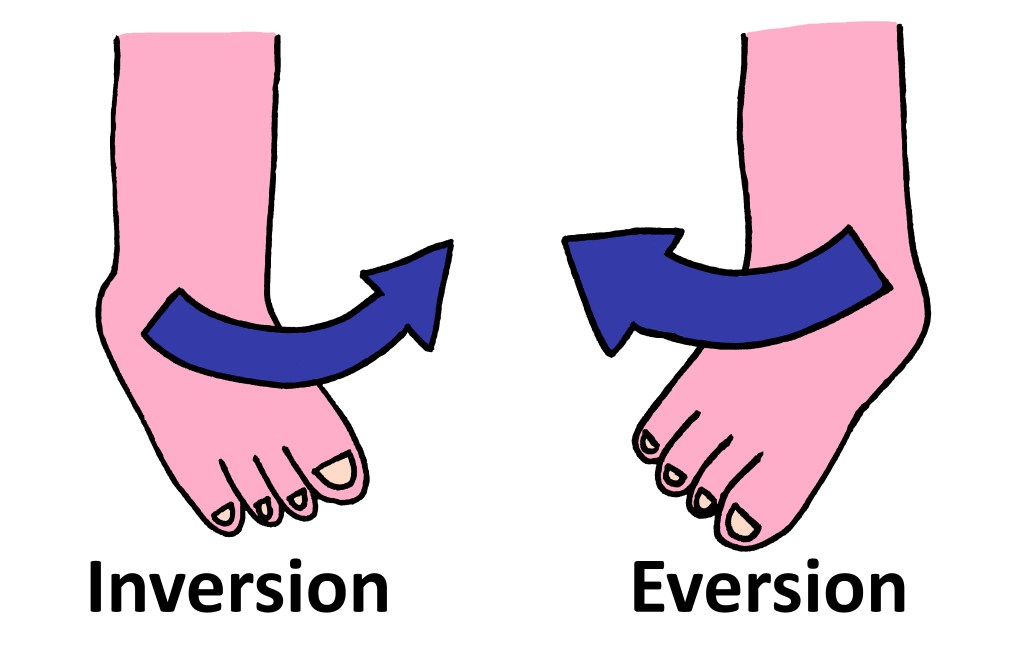
Example Move: inversion and eversion could be performed as part of a warm up to mobilise the ankles.
Remember It: Inversion is when you turn your foot Inwards.
Why Is It Useful To Know All This?
Knowing the joint movement terms is useful for a number of reasons:
- They can help when explaining gym exercises; for example, a Zottman curl uses a supinated grip during the lift but a pronated grip during the lowering phase, and leg abductor and adductor machines tell you what movement they help you perform.
- They can help to tell you what particular muscles do; for example, the hip flexors perform flexion at the hips.
- They can help with safety by telling you what movements are permitted by each joint and what their range of motion is.
It’s also worth noting that whilst some exercises are performed using just one pair of opposing joint movements, more complicated ones such as compound moves will use a combination of joint movements.
For example, a bicep curl uses one pair, employing flexion and extension of the elbow in order to lift and lower the weight.
A bench press, however, uses flexion and extension to bend the elbow at the same time as employing horizontal flexion and extension to bring the upper arm inwards and outwards.
Phew! Got all that? Okay, just to finish, here’s a diagram that brings them all together…
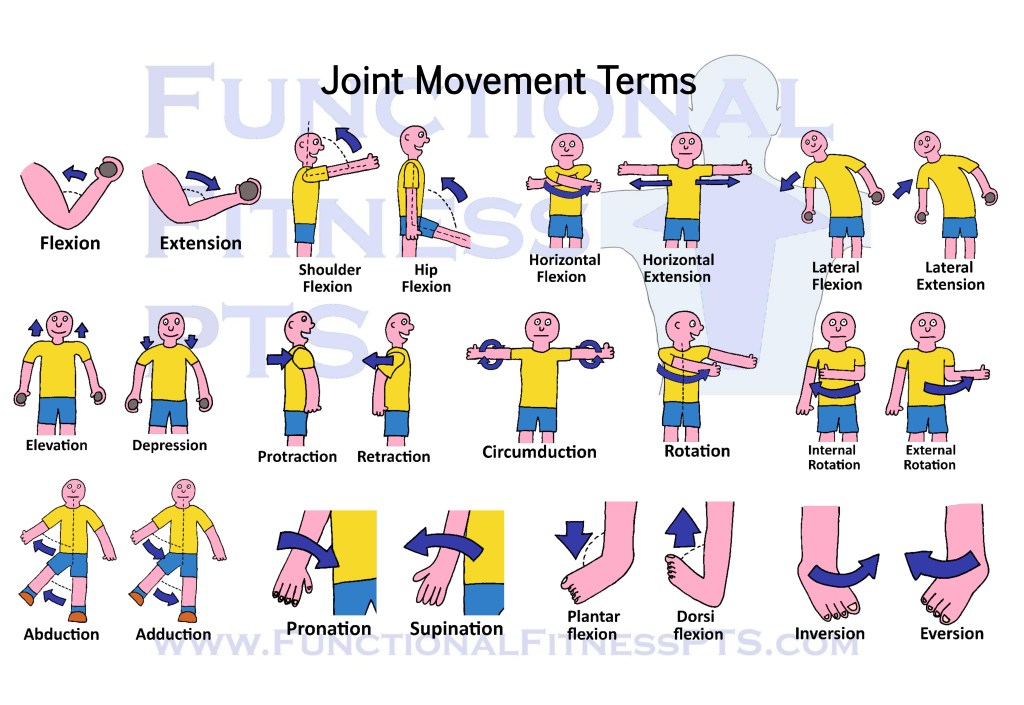
And you can download a copy of this here.
 Functional Fitness PTS