
Both the Level 2 and Level 3 Personal Training syllabuses look at micronutrients (though Level 3 only briefly summarises them again) so here we’re going to take a look at the main ones.
The first thing you need to remember is the difference between macronutrients and micronutrients:
- Macronutrients are needed in larger amounts and include fat, protein and carbohydrates. The main purpose of macronutrients is to provide energy, but they also have a number of important functions within the body such as providing insulation and storage, and assisting with tissue repair.
- Micronutrients are needed in smaller amounts and include vitamins and minerals. (So the simplest way to tell the difference is to remember that ‘micro’ means ‘small’.) These play an important role in a great many bodily functions, which we’ll look at below.
Micronutrients are then divided into two categories:
- Vitamins, which are organic compounds (meaning they contain carbon).
- Minerals, which are chemical compounds.
Vitamins
There are two types of vitamin:
- Water-soluble vitamins, which dissolve in water, and cannot be stored by the body. These are Vitamins B and C.
- Fat-soluble vitamins, which are stored by the body, in bodily fat. These are Vitamins A, D, E and K.
Now let’s look at each vitamin in detail.
Water-Soluble Vitamins
Vitamin B
Found in: meat, eggs and dairy, as well as a wide range of fruit and vegetables including bananas, spinach, broccoli and potatoes.

Important for: metabolism, synthesis of red blood cells, preventing tiredness and maintaining healthy skin, hair, eyes and muscle tone.
Fun facts: It is thought that Vitamin B12 is the only vitamin humans cannot get from plant sources, though there is some debate surrounding this. A deficiency of Vitamin B can lead to beriberi and a deficiency of Vitamin B12 can lead to anaemia.
Vitamin C
Found in: many fruits and vegetables including broccoli, mango, oranges and berries.

Important for: wound healing including tissue repair, immune system function and formation of collagen.
Fun facts: Vitamin C is an antioxidant. A deficiency can lead to scurvy. Cooking foods often reduces the amount of Vitamin C in them.
Fat-Soluble Vitamins
Vitamin A
Found in: meat, fish, dairy and eggs, as well as fruits and vegetables such as carrots, sweet potatoes and spinach.
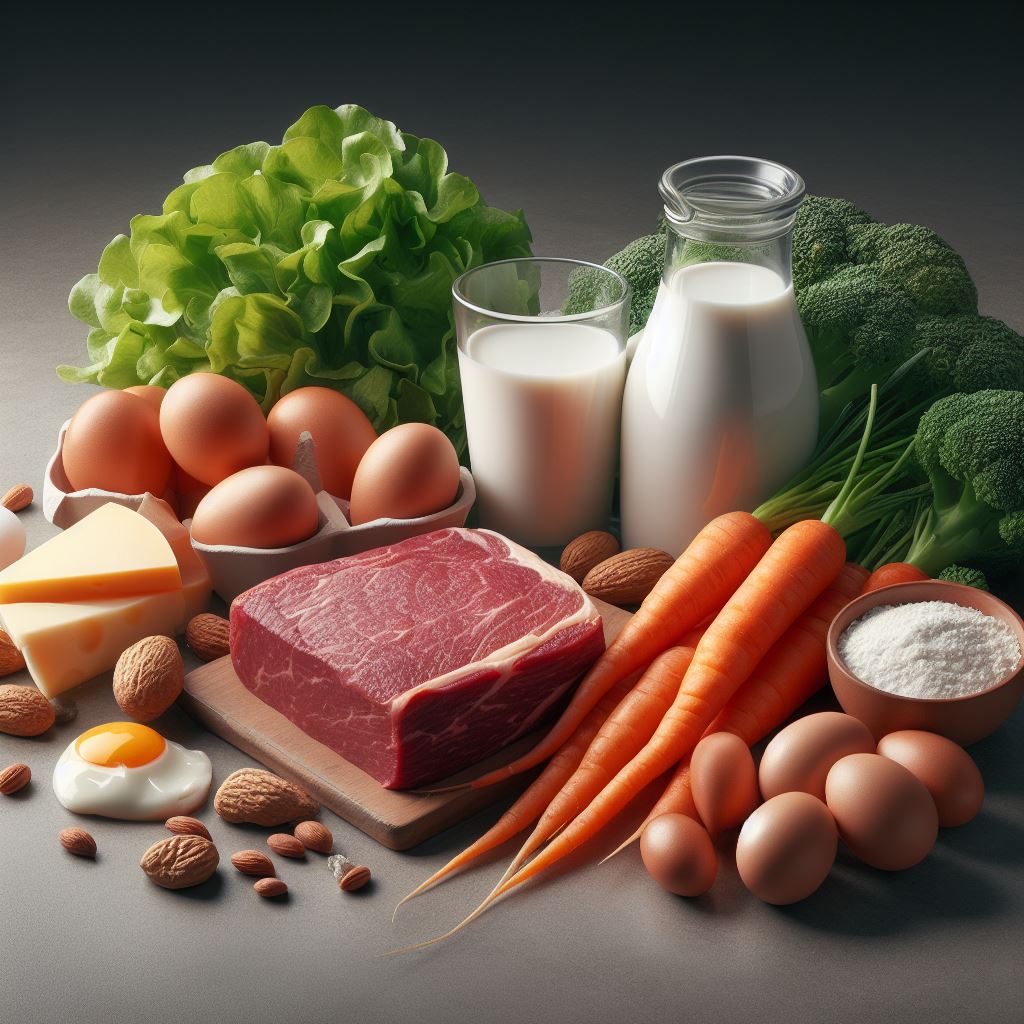
Important for: maintenance of the immune system, embryo development and vision.
Fun facts: when humans obtain Vitamin A from animal sources it is in the form of retinol, and when they obtain it from plant sources it is in the form of carotenoids such as beta-carotene, which is in carrots and gives them their orange colour.
Vitamin D
Found in: fatty fish, dairy and mushrooms, but is mainly made by the body from exposure to sunlight.
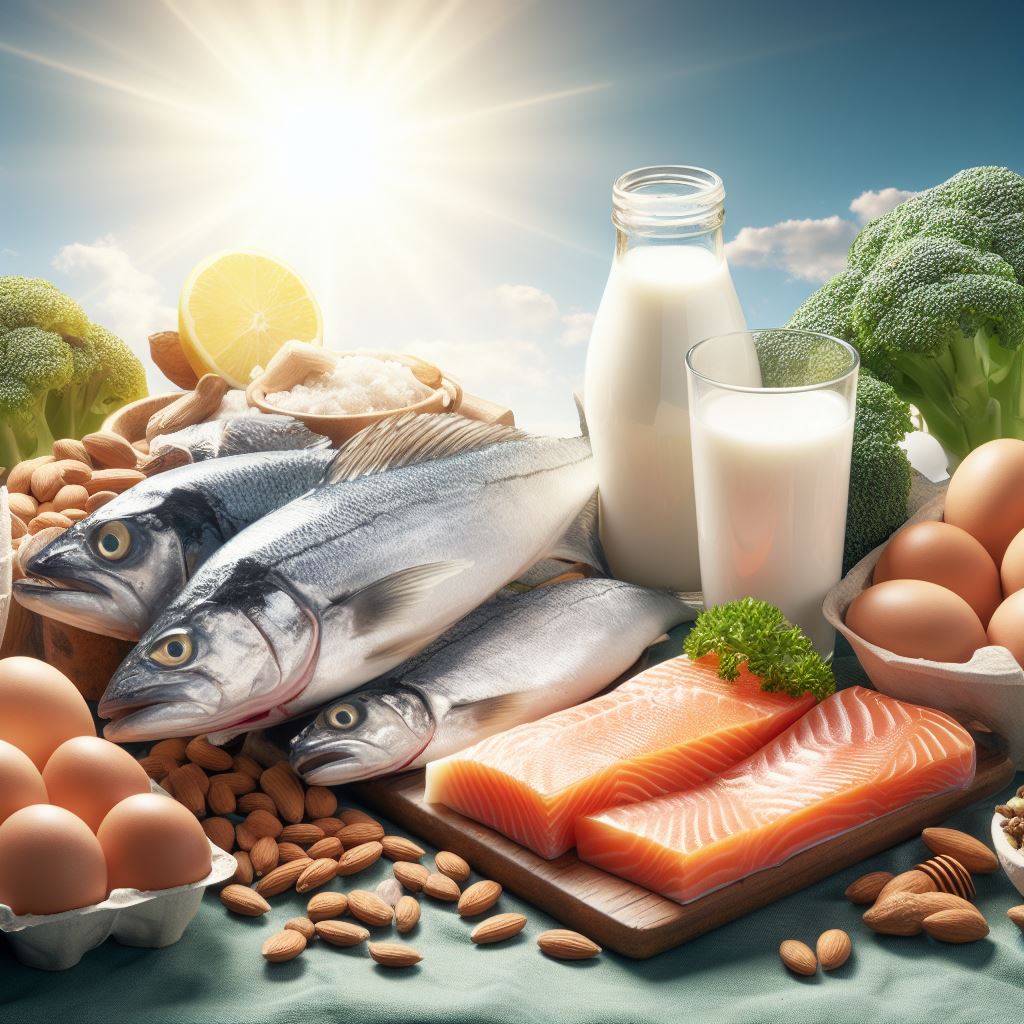
Important for: bone growth and development.
Fun fact: deficiency can lead to rickets, a weakening of the bones. (Okay, that’s probably just a fact rather than a fun one.)
Vitamin E
Found in: meat, fish and dairy, as well as spinach, asparagus, broccoli and nuts including almonds, peanuts and hazelnuts.
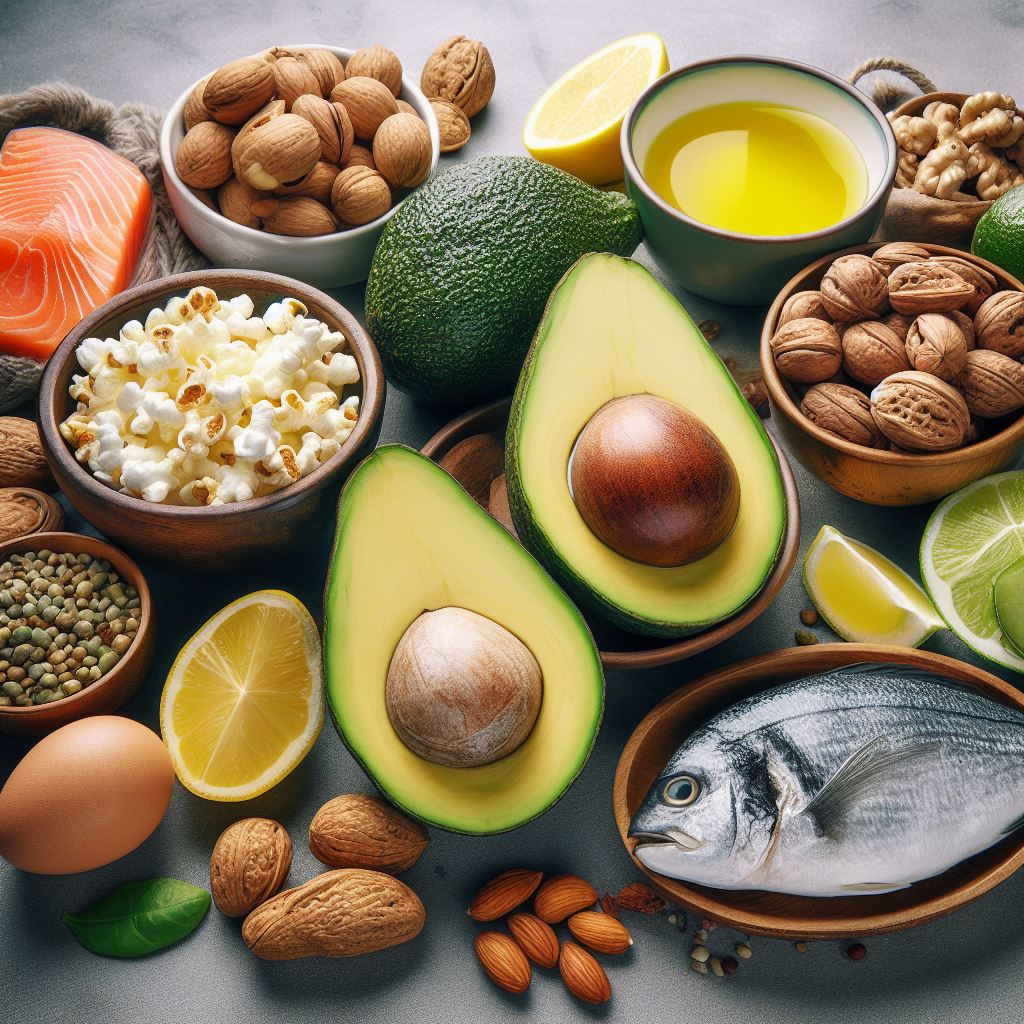
Important for: strengthening the immune system and protecting the body from chemical damage.
Fun fact: Vitamin E is an antioxidant (along with Vitamin C), hence it helping to protect the body from chemical damage.
Vitamin K
Found in: green vegetables including spinach, broccoli and asparagus, as well as nuts, grapes, tomatoes, poultry and eggs.
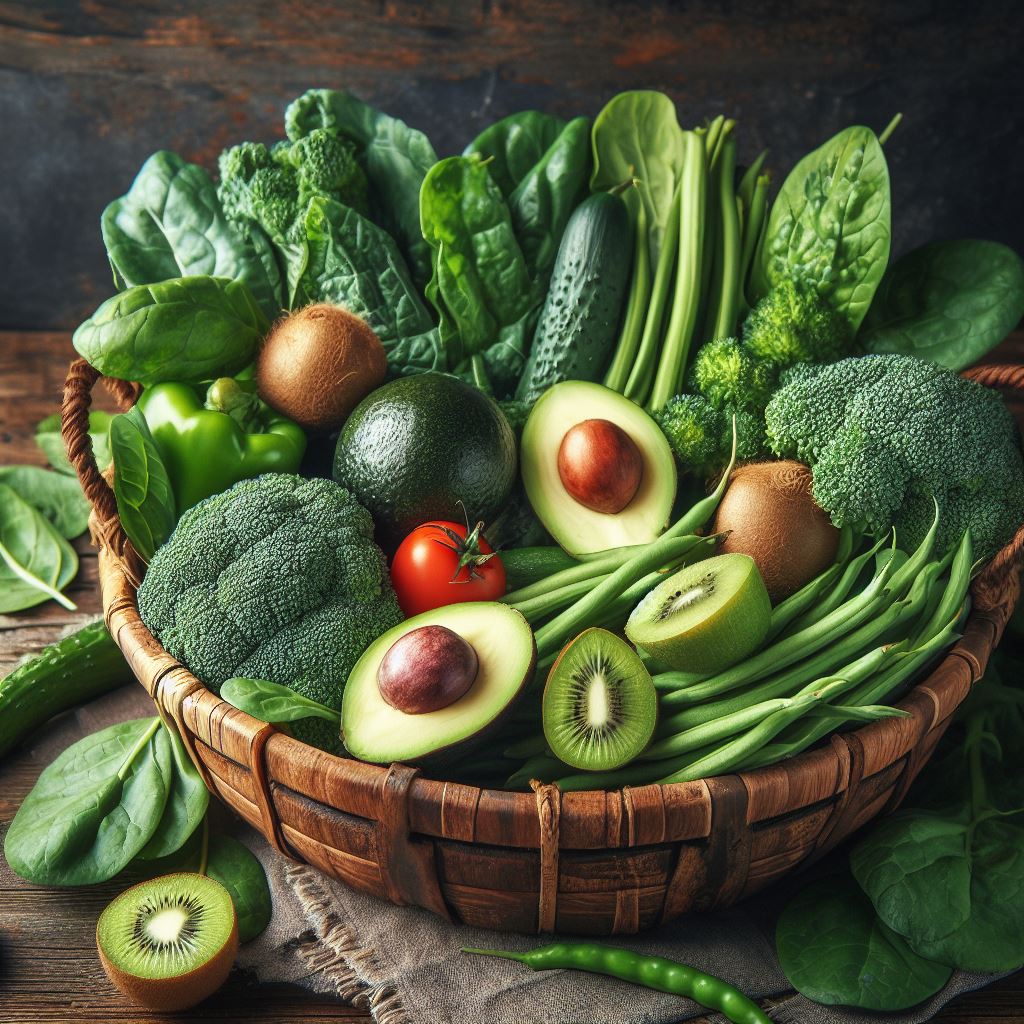
Important for: bone formation and blood clotting.
Fun fact: Vitamin K is found in highest amounts in leafy green vegetables.
Minerals
Now let’s go back to minerals. These, remember, are chemical compounds.
Like vitamins, they play an important role in many bodily functions, and the minerals usually covered in the Level 2 and Level 3 syllabuses are:
Calcium, which is important in muscle contraction and bone growth (and is stored in bones).
Chloride, which aids digestion and regulates fluid balance.
Iron, an important part of haemoglobin, which transports oxygen around the body. Deficiency can lead to anaemia.
Magnesium, which aids bone formation and nerve transmission.
Phosphorus, which aids bone growth.
Potassium, for water and electrolyte balance, and proper function of cells.
Sodium, which regulates water and blood levels (salt is mainly made of this).
Sulphur, which is involved in muscle cell structure, preventing infection and skin formation.
Zinc, which helps enzymes do their job, particularly those involved in growth. It also plays an important role in reproductive health.
Levels of Minerals in the Human Body
There are seven micronutrients that the human body needs in larger amounts: calcium, chlorine, magnesium, potassium, phosphorous, sodium and sulphur.
The micronutrients that the body needs in smaller amounts (usually no more than 100mg per day) are known as trace elements. These include zinc, iron, copper, cobalt, selenium, chromium and iodine.
So there you are! It’s quite a lot to take in and, whilst it’s worth revising the individual vitamins and minerals when you’re preparing for the exam, no one’s really expecting you to memorise everything about them. Having said that, if you intend to specialise in nutrition further down the line in your fitness career, then you might want to!
And, finally, if you want to learn more about this topic (or, indeed, check this article is based on reputable sources), here are some links, which range from a simple definition of terms to some in-depth examinations of them:
https://www.merriam-webster.com/dictionary/trace%20element
 Functional Fitness PTS