
You hopefully know that protein is a macronutrient involved with muscle repair, but if you’re not entirely sure what amino acids and BCAAs are then we’re going to examine them here, as well as go into more detail about the functions protein has in the body.
First of all, put simply, amino acids are what protein is made of; they’re sometimes called the ‘building blocks’ of protein.
Secondly, BCAAs are a type of amino acid; their name stands for Branched-Chain Amino Acid.
We’ll cover these in more detail later, but first of all let’s look at some of the roles that protein plays within the body.
The Functions of Protein
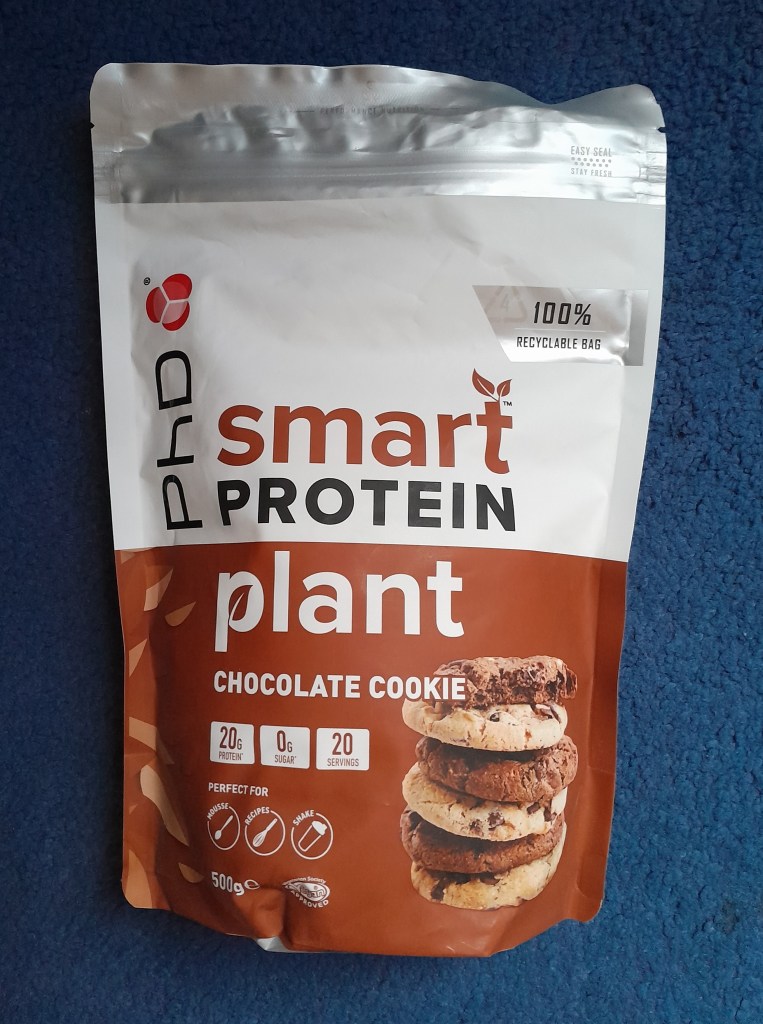
If you’ve ever wondered exactly how protein helps to build muscle, it’s because lifting weights actually damages muscle fibres, and protein is one of the things that helps to repair them, as well as (hopefully) making them bigger as a result. The process of muscles getting larger is known as hypertrophy.
As well as helping to build muscle, however, protein has an important number of other roles in the body, including:
- Dealing with Growth and Repair of Tissues. Protein doesn’t just help with building muscle; it also repairs skin, hair and nails.
- Assisting with Digestion. Enzymes, which break down food during the digestive process, are proteins.
- Providing Energy. Whilst protein is not the body’s preferred source of energy, it can be used in extreme circumstances, once glucose and fat stores have been depleted.
- Transporting Oxygen Around the Body. Haemoglobin, which carries oxygen around the body in the blood, is a protein.
- Carrying Messages Through the Body. Certain hormones, such as insulin, are proteins.
Now we’ve looked at the importance of protein in the body, let’s return to examining how it’s made up.
Amino Acids
Amino acids are organic compounds used by the body to make proteins.
Proteins are long chains of amino acids, and there are thousands of different proteins in the body, so you can think of each type of protein as having a particular recipe, with the amino acids being the ingredients.
There are twenty amino acids that the human body uses to make proteins: alanine, arginine, asparagine, aspartate, cysteine, glutamine, glutamate, glycine, histidine, isoleucine, leucine, lysine, methionine, phenylalanine, proline, serine, threonine, tryptophan, tyrosine and valine.
Protein powders often tell you how much of each amino acid they contain on the packaging, such as on this one:
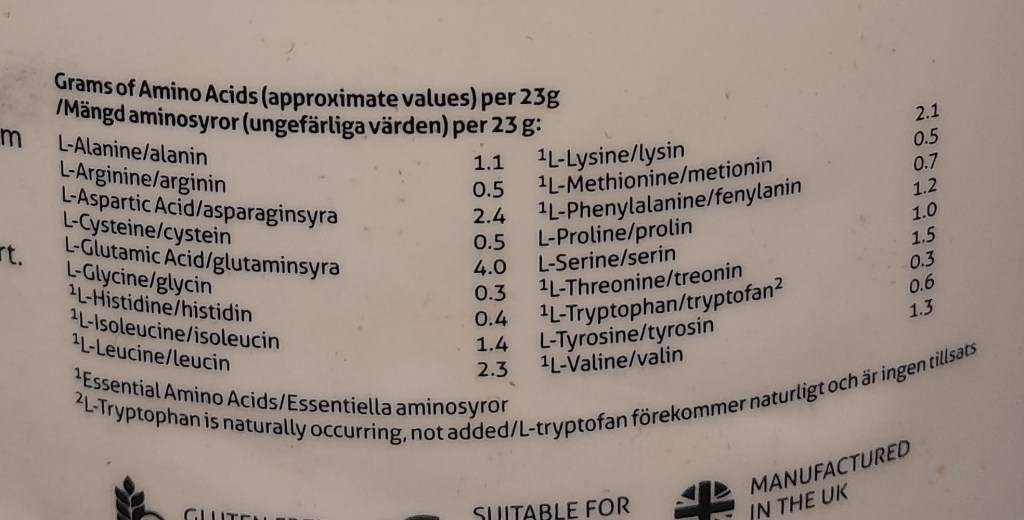
(And whilst you probably haven’t heard of all these, you may well have heard of tryptophan due to the incorrect belief that its presence in turkey is what makes you fall asleep after Christmas dinner.)
Essential Amino Acids
Nine of the amino acids are essential amino acids.
An essential amino acid is an amino acid that cannot be produced by the body, so must be obtained from the diet.
The nine essential amino acids are histidine, isoleucine, leucine, lysine, methionine, phenylalanine, threonine, tryptophan and valine.
BCAAs
Three of the essential amino acids are what are known as BCAAs, or Branched-Chain Amino Acids. (Their name refers to how they have a different chemical structure to the other essential amino acids, with a chain that branches off the main structure, but that’s only really going to be of interest if you’re into chemistry.)
The three BCAAs are leucine, which helps repair muscle tissue, isoleucine, which helps regulate energy, and valine, which does both these things. When people supplement with BCAAs it is because these functions are beneficial when exercising, and there is also evidence that BCAAs can reduce DOMS after a workout.
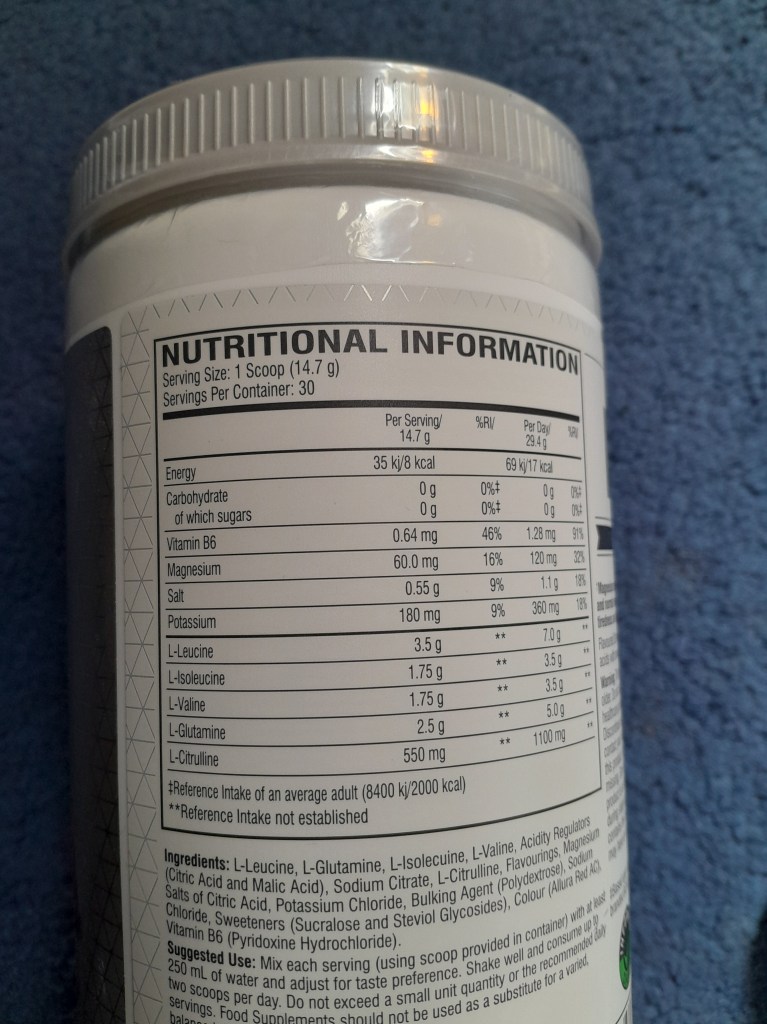
A common serving is one that provides:
- 3.5g of Leucine
- 1.75g of Isoleucine
- 1.75g of Valine
This is often referred to as a 2:1:1 ratio, but depending on the brand you use, there may be other ratios used, such as 3:1:1 and 4:1:1, both of which contain a higher ratio of leucine.
BCAA supplements also often contain Vitamin B6, which helps to break down amino acids as well as helping the body to use energy, and l-glutamine, which is believed to help with tissue repair.
BCAAs are generally taken before and during a workout.
Outside of workouts, some research has suggested you should aim to consume 2-3g of leucine per meal; foods including eggs, salmon, chicken and tuna are high in this.
Put very simply, BCAAs are believed to help provide energy during a workout as well assisting with muscle building.
So, to summarise the numbers:
- There are twenty amino acids used by the body.
- There are nine essential amino acids.
- There are three BCAAs.
And now that we know what amino acids are, how does the body use them to make proteins?
The Amino Acid Pool
The construction of proteins is called protein synthesis. The body constructs proteins using the amino acid pool, which is a reservoir of available amino acids the body can use.
You can think of it as being like a pile of Lego bricks. You can use them to build something, then once it’s served its purpose it can be disassembled until the parts are needed to build something else.
The amino acid pool contains a mixture of amino acids from recently eaten food as well as amino acids returned to the pool after the protein they were used to make has been disassembled.
How Much Protein Can The Body Process in A Single Sitting?
There’s a commonly-held belief that the human body can only process 25-30g of protein in one sitting but, like so many things in the world of fitness, this is the subject of some debate, such as over whether the body can utilise the amino acids to build muscle beyond this level of intake.
A study by The Journal of the International Society of Sports Nutrition suggested it is more complicated than that, and found that a more precise way to look at it is to consume 0.4g of protein per kg of bodyweight per meal over a minimum of four meals a day. (Interestingly, for someone weighing 64kg this would actually work out at 25.6g of protein, though this would of course be different for other people.)
The authors also noted that by following this system you would actually end up consuming at least 1.6g of protein per kg of bodyweight per day, which is believed to be the optimum amount for muscle and strength gains.
Conclusion and Sources
So there we are. Hopefully all this has provided some insight into the function and structure of protein, as well as how much you should be having and why people supplement with BCAAs.
If you want to learn more about any of these topics (or, as ever, check this article was put together from reliable sources) then you may find the following interesting:
An overview of proteins and their functions: https://www.eufic.org/en/whats-in-food/article/what-are-proteins-and-what-is-their-function-in-the-body
https://www.nutrition.org.uk/healthy-sustainable-diets/protein/?level=Health%20professional
The science behind how hypertrophy works: https://www.unm.edu/~lkravitz/Article%20folder/hypertrophy.html
The amino acid pool: https://chem.libretexts.org/Courses/Brevard_College/CHE_301_Biochemistry/10%3A_Metabolism_of_Amino_Acids/10.01%3A_Proteins_metabolism
More on amino acids, including RDAs, sources and details about each individual one: https://my.clevelandclinic.org/health/articles/22243-amino-acids
The practical uses of BCAAs; this article includes links to studies suggesting they can assist with DOMS, muscle growth and endurance: https://breakingmuscle.com/bcaa-benefits/
How much protein you need: https://www.bhf.org.uk/informationsupport/heart-matters-magazine/nutrition/ask-the-expert/how-much-protein-should-i-eat-to-gain-muscle
British Journal of Sports Medicine article on how much protein should be consumed in a day: https://bjsm.bmj.com/content/52/6/376
Article from The Journal of the International Society of Sports Nutrition on how much protein can be consumed in a single sitting: https://www.ncbi.nlm.nih.gov/pmc/articles/PMC5828430/
 Functional Fitness PTS