
Most of of have got busy lives these days and it’s fair to say we don’t have time to spend two hours in the kitchen every day, right?
Also, a lot of diets don’t work because they’re too restrictive. It’s better to make sustainable and achievable changes to what you eat that you can stick to.
The good news is that there are some small(ish) changes you can make to improve what you eat that neither take up a huge amount of money or time. So, here we’ve tried to summarise a few of them, including:
- Eat More Fruit and Vegetables
- Drink Water Rather Than Soft Drinks
- Eat Meals That Are Evenly Balanced And Evenly Spaced Out
- Learn To Understand Food Labels
- Understand the Full Nutritional Content of Foods
- Swap Out Certain Foods For Other Ones
- Get Into The Habit of Bulk-Preparing Meals
- Bulk Out Meals With Things That Are Filling But Not Fattening
Eat More Fruit and Vegetables
This may seem like a really obvious one, but getting your five-a-day (or more) is a rare example of government advice being useful. Fruit and veg are high in not just vitamins but also antioxidants, which help fight free radical damage. On top of that, they’re a good source of fibre, which a lot of people don’t get enough of, and which contributes to a healthy digestive system as well as keeping you regular. You know what we’re talking about.
This can be as simple as buying a bunch of bananas and bag of apples then keeping them at your desk so you’ve always got something healthy to snack on.
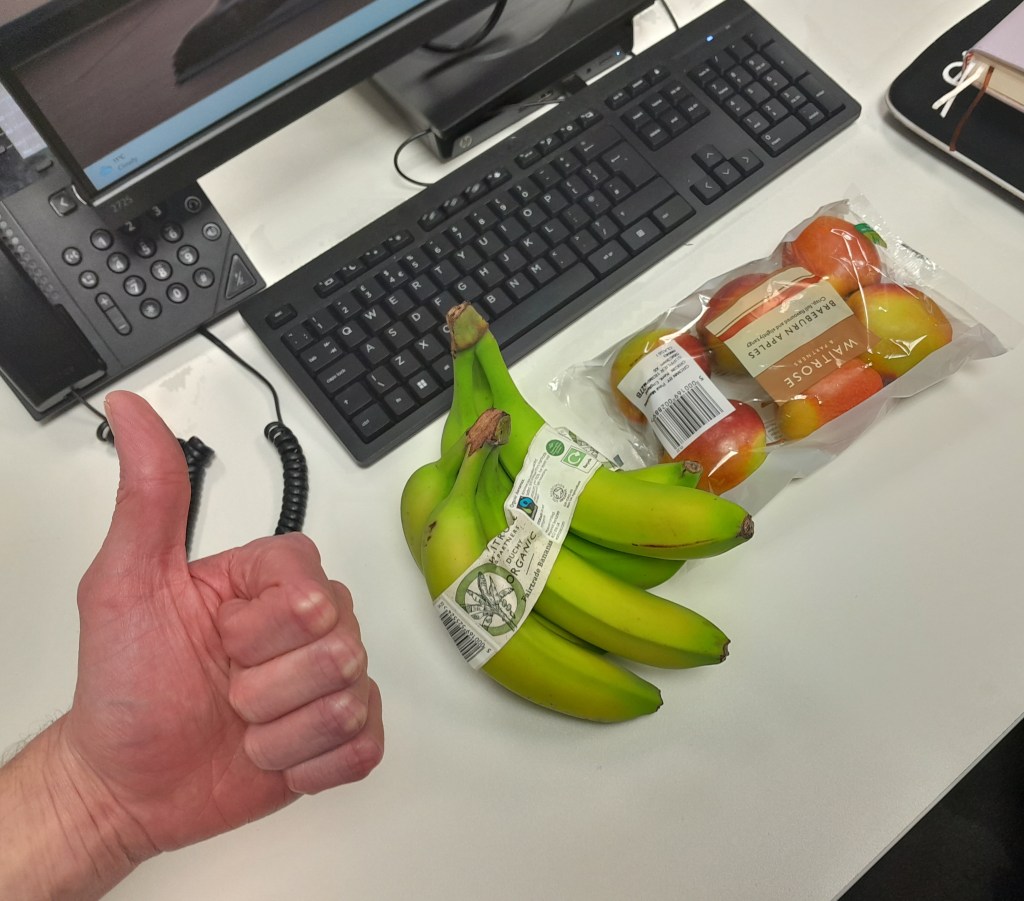
For example, an apple is only around 40-50 calories whilst blueberries have around 43 calories per 100g.
Drink Water Rather Than Soft Drinks
Again, the advice that you should stay hydrated may seem obvious, but the key point here is to stick to water and avoid fizzy drinks.
Fizzy drinks contain what are known as empty calories; Coke may have no fat in it, but one can contains almost 40g of sugar.
There are also a range of health conditions linked to consuming fizzy drinks, but if you think that sugar-free versions are a healthier option, that may not be the case; some research has suggested that drinking those may still increase your chances of developing Type-2 diabetes.

With regards to how much water you should drink, the commonly-repeated advice to drink eight glasses a day doesn’t appear to be based on any actual evidence.
More reputable sources say that staying hydrated is as simple as just drinking when you’re thirsty, but taking into account any additional factors such as your activity levels and how hot it is (meaning that you’re sweating more).
Eat Meals That Are Evenly Balanced and Evenly Spaced Out
Rather than going for hours without eating then having a massive meal, it’s a good idea to eat at regular intervals and have portions that are consistently sized and nutritionally balanced.
An example of this would be having meals of around 500-600 calories that contain between 20-30g of protein (depending on your size and fitness goals).
A way to structure this is to have meals like this every three hours, which could be 9am, midday, 3pm and 6pm.
Furthermore, when we say ‘meals’ we don’t mean that each one has to be a full, sit-down affair; you could start with overnight oats, have something from a sandwich shop at twelve (see below), have peanut butter on toast at 3pm (also see below) and tuna salad in the evening.
If you’ve got more time to prepare food, the other recipes on our meal prep page are all around 500-600 calories with 20-30g of protein, too.
Learn to Understand Food Labels
Make sure you read the nutritional information on things like sandwiches, keeping an eye out for protein content, calorie content and whether they’re high in saturated fat.
This delicious smoked salmon sandwich from Pret, for example, comes in at just over 400 calories and has a decent hit of protein at 22.2g. Whilst it contains 17.5g of fat, you’ll see that only 5.3g of that is saturated fat, or ‘bad fat’.
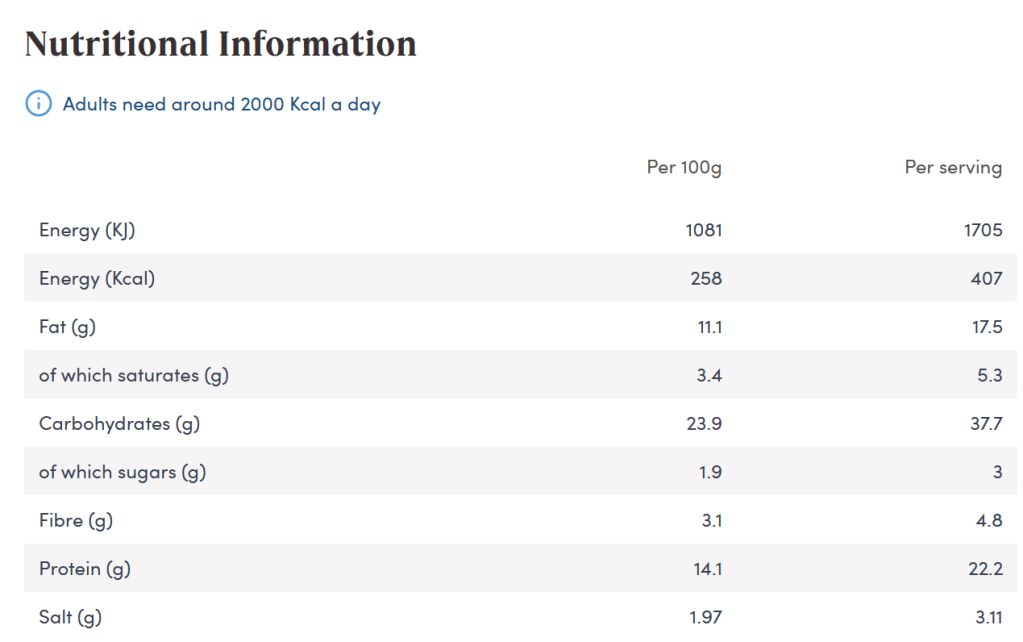
The tuna mayo and cucumber baguette has 514 calories and 25.2g of protein, so is quite well balanced (though white bread has a higher GI rating than brown bread).

The sushi festival from Itsu contains a 19g of protein as well as coming in at just over 500 calories and containing just 1.6g of saturated fat (even if white rice is a high GI food):

And what about Greggs’ infamous vegan sausage roll? Well, there isn’t time here to go into the debate over whether a vegan diet is healthier than a non-vegan one, but it is worth mentioning that just because something is vegan that doesn’t mean it’s automatically healthy.
For example, look at this: not only does a single sausage roll contain 18g of fat, nearly 9g of that is saturated. Plus there’s a lot of salt in there.
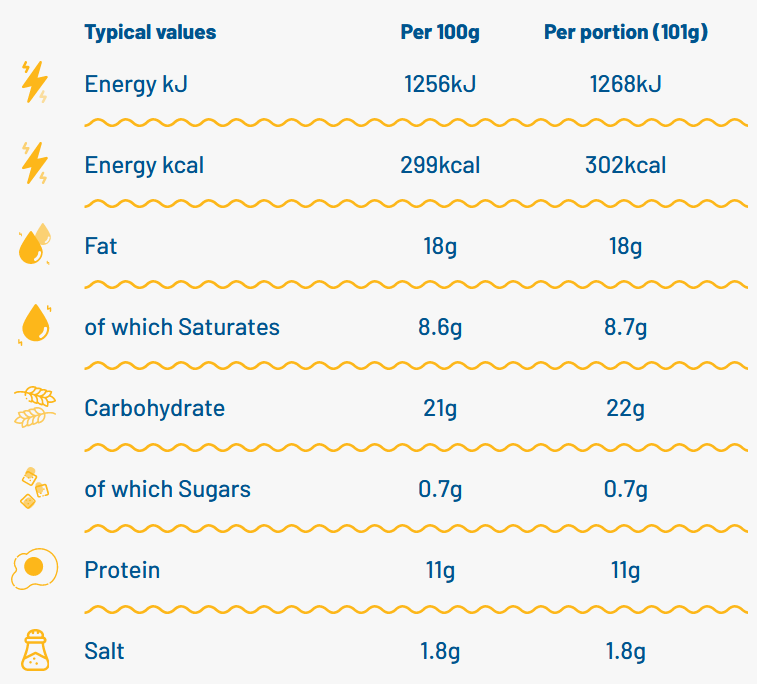
And if you look at the levels of fat, saturated fat and salt it contains compared to the recommended levels that you shouldn’t exceed, they’re all pretty high:

(Though here’s an interesting thing: this is made using Quorn, and Quorn is actually very low in saturated fat. So presumably the pastry is to blame…)
Understand the Full Nutritional Content of Foods
We often think of foods as being ‘carb foods’, like bread, or ‘protein foods’, like chicken, and whilst some foods do neatly fit into such a classification – for example, tuna is very high in protein whilst containing very little fat and carbs – it’s not always as simple as that.
For example, this brown bread is 10% protein, even though we think of bread as a carb:

Understanding things like this will give you a better understanding of your overall intake as well as helping you to control it.
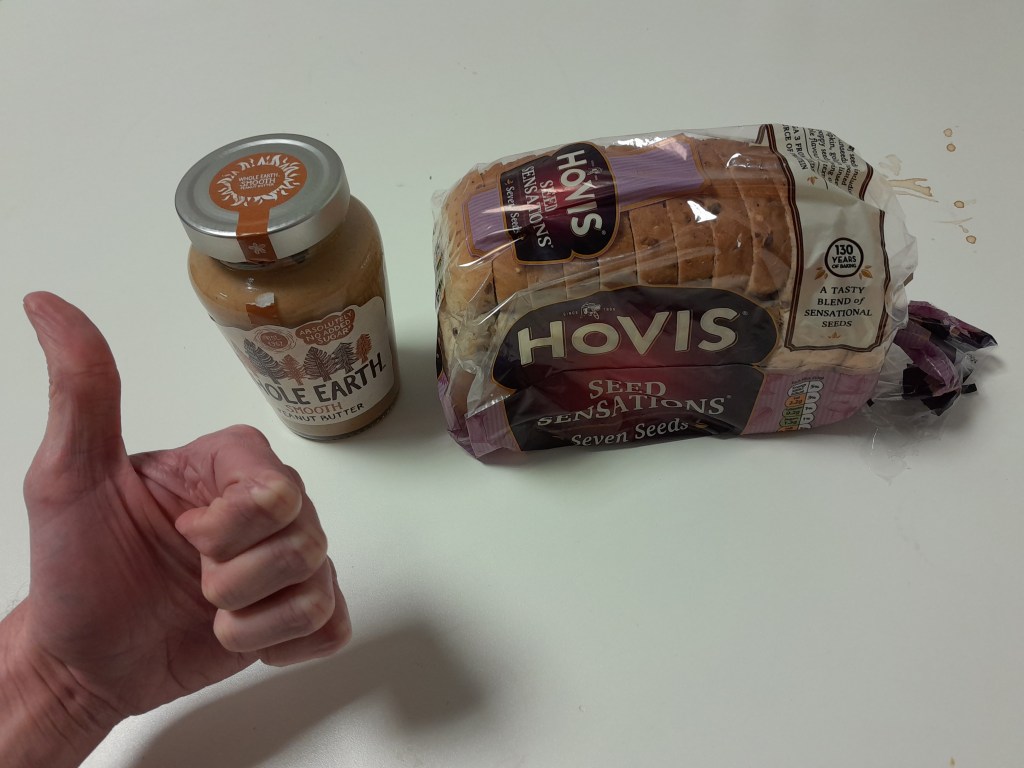
So, if you add a certain quantity of peanut butter to a slice of bread because you want to get a particular amount of protein, you may end up eating more protein and more calories than necessary because you weren’t aware how much protein there was in the bread.
Four slices of this will provide you with 13g of protein, so if you add 40g of peanut butter (which works out as a large tablespoon) then the total serving will contain around 600 calories and 25g of protein.

If you weren’t aware there was already a lot of protein in the bread then you might have assumed it all had to come from the peanut butter and had 80g of that in order to get 22g of protein. But that would have meant you were actually eating 35g of protein and almost 900 calories.
Look Out for Seemingly Healthy Foods That Have Unhealthy Ingredients Added
Whilst it’s probably a slight exaggeration to suggest that sugar is as addictive as heroin, the amounts of it you see added to everyday products could lead you to wonder whether food companies are in fact slyly part of a global conspiracy to get everyone hooked on the stuff, particularly when you consider how often it’s added to products you’d normally consider healthy. For example, it’s now sadly quite common to see it added to brown bread.
Therefore, it’s always worth checking the ingredients of food you buy just to check what’s really lurking in it.
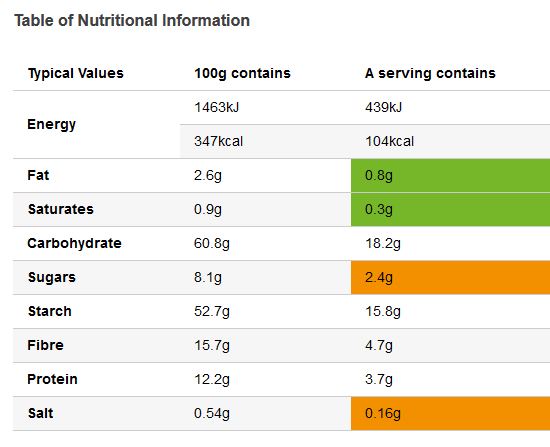
Bran Flakes, for example, are often seen as a ‘healthier’ breakfast cereal when compared to all the sugar-laden fare that’s out there, but even when you check the ingredients of those you may be surprised to see that (in the case of this supermarket own-brand version) the sugar content is quite high; in this case, it’s actually 8% (though some of this may be naturally occurring sugars):
You’ve probably seen a lot of bad press about ‘Ultra Processed Foods’, or UPFs, in the media recently, but even if you need a science degree to understand what a lot of things added to food actually are, you should still be able to make a judgement about sugar and fat content based on food labels.
Swap Out Certain Foods For Other Ones
This can involve swapping one food for another that is nutritionally similiar in some ways but nutritionally superior in others. If possible, try to find substitutes where the amount of protein and fibre is the same (or higher) but the sugar and fat content is lower. Examples of this include:
- Swapping halloumi for salmon. Whilst they both have similar amounts of calories and protein, halloumi is far higher in saturated fat whilst salmon is rich in Omega 3s, making it a healthier option (even if it is quite calorific for a fish).
- Swapping steak for tuna steak. Not only does tuna contain more protein and fewer calories than steak, steak is higher in saturated fat whilst tuna has virtually none. (And that’s before you factor in the increased risk in developing bowel cancer that comes with consuming red meat).
- Swapping milk chocolate for dark chocolate. We’re not suggesting you eat a whole bar, but dark chocolate has less added sugar and fat than milk chocolate, and there are believed to be health benefits to consuming dark chocolate, partly due to its flavonoid content.
- Swapping breakfast cereals for oats, as many breakfast cereals are highly processed and contain a lot of sugar. Or, at the very least, swap breakfast cereals that have lots of added sugar for ones that don’t have any, like Shredded Wheat.
- Swapping white bread for brown bread, white rice for brown rice and corn flakes for bran flakes.
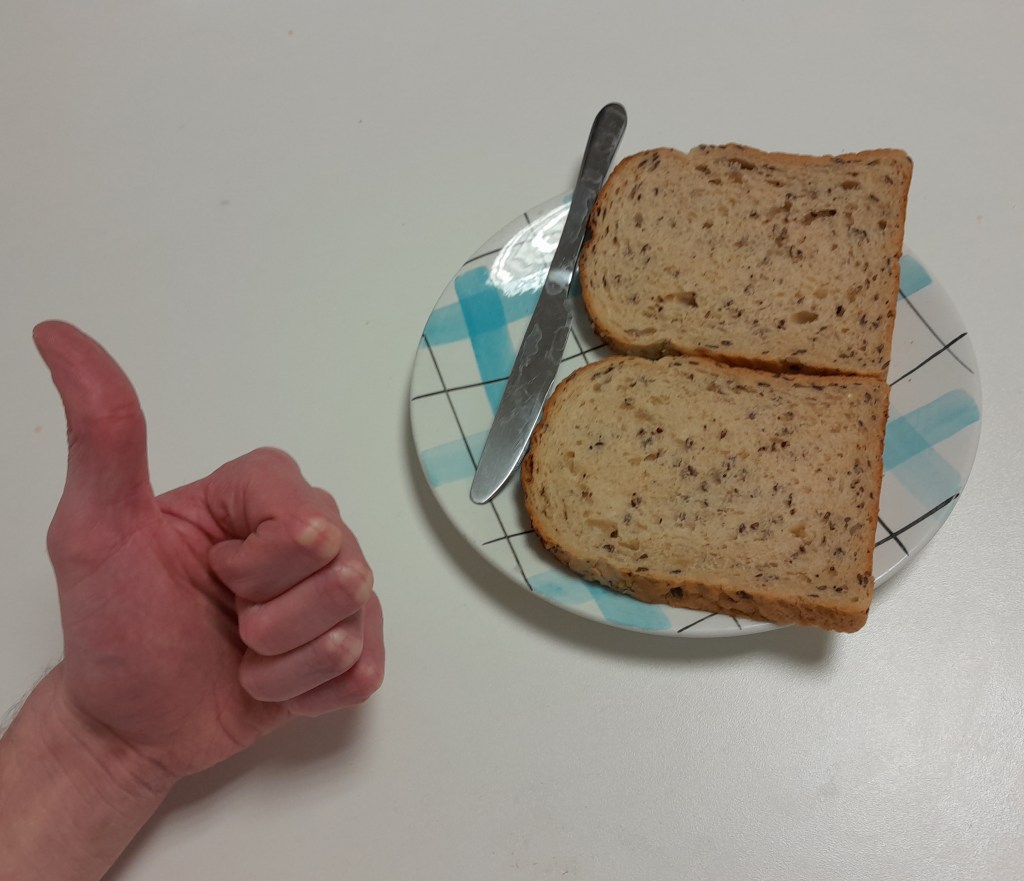
The last two are examples of swapping a high-GI food for a low-GI food. GI, or Glycaemic Index, refers to the speed at which a food affects your blood sugar levels. Low-GI foods enter your blood more slowly, so provide a more steady release of energy than high-GI foods, which cause a spike in blood sugar followed by a crash. Brown bread, brown rice and bran flakes are all high in fibre, which is something many people do not get enough of.
Get Into the Habit of Bulk-Preparing Meals
If you’re cooking on a Sunday, why not make four times the quantity then save the other portions to have during the week? The amount of time you spend preparing food is still the same, but this will then not only save you money during the week but save you time because you won’t need to go out and buy lunch.
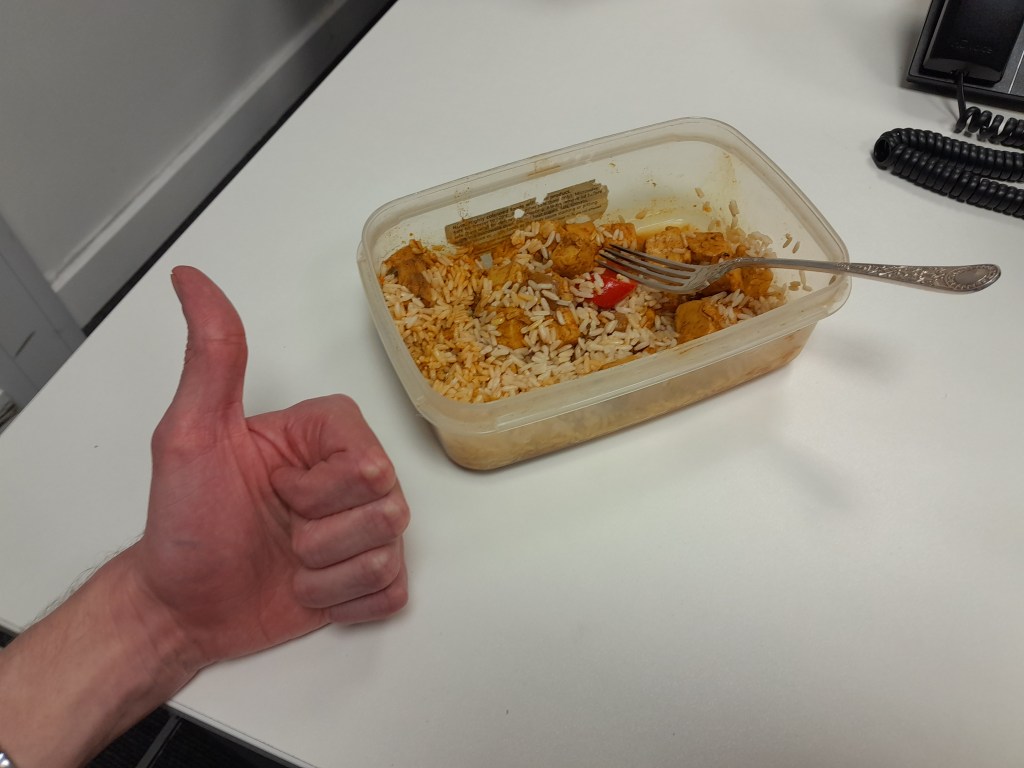
You could start getting into the habit by following some of our meal prep recipes.
Bulk Out Meals With Things That Are Filling But Not Fattening
Foods you can use to do this include:
- Broccoli. This contains only 40 calories per 100g. (And, you may be surprised to learn, 4.3g of protein.)
- Lentils. These contain just 82 calories per 100g (as well as 6g of protein).
- Mushrooms. Not only do these contain virtually no carbs, fat or calories, 100g of chestnut mushrooms will provide 100% of your RDA of Vitamin D.
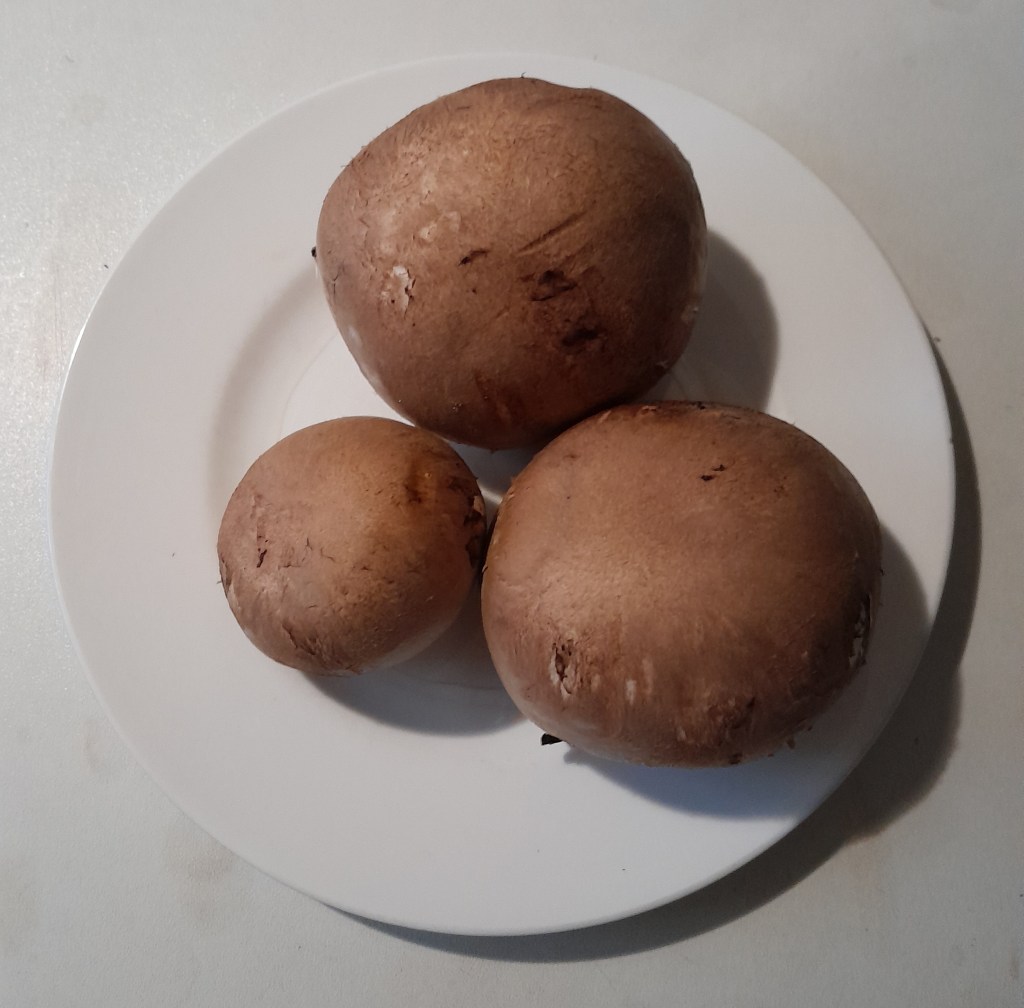
None of these things may be particularly exciting, but they will help fill you up, so consider including a chunk of broccoli as a side dish, or mixing lentils or mushrooms into pasta sauces or curries.
 Functional Fitness PTS