
The following points are general safety considerations to be aware of when in the gym, rather than detailed explanations of how to perform individual moves (which can be found here), but should still be useful for anyone new to the gym or for personal trainers working with inexperienced clients.
When carrying out moves in the gym it’s a good idea to think about the following things; they’re listed here before the article looks at each one in more detail:
- Be aware of your spinal position
- Check your foot placement
- Ensure the muscles you’re trying to target are the ones doing the work
- Perform the moves under control
- Pay attention to your breathing
- If something’s hurting, stop!
Be Aware of Your Spinal Position
You may have vague memories of your teacher telling you to sit with your back straight. However, that’s pretty much impossible because in its natural position the spine is an S shape; the biomechanical reason for this is so that the weight of the body is evenly distributed down it, as if the spine were straight then this would mean the vertebrae at the bottom would take pretty much all of the body’s weight and therefore be under considerable strain. Ouch.
Therefore, it’s generally a good idea to maintain the spine’s natural curves (also known as ‘maintaining a neural spine’) when performing an exercise, protecting it by not having it take excess weight or pressure in a particular area. (So what your teacher should have told you was to ‘sit with a neutral spine’!)
Here’s how you should try to position your spine when performing different types of exercise:
For moves where you’re standing upright and the torso is moving up and down (like a squat or deadlift):
- You should maintain the spine’s position in relation to itself, which is to say the spine should be supporting and assisting with the exercise without any of the individual sections excessively moving. In practice this means that whilst other parts of the body (such as the arms or legs) are moving, the spine should be kept stable.
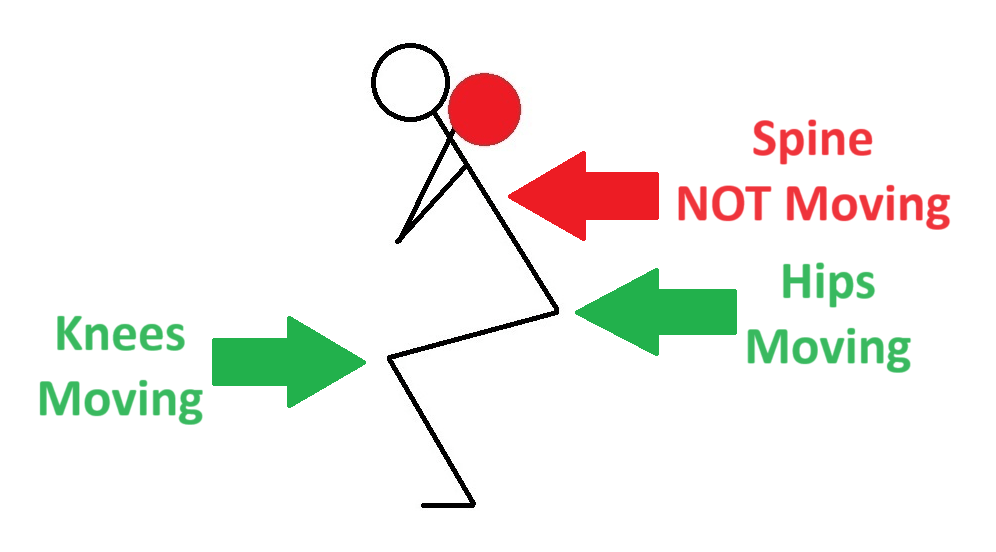
For example, in a squat you’re hinging at the hips and knees, so you should let them do the work rather than, say, hunching the shoulders or flattening the curve in the lower back and causing them to take the strain; the integrity of the spine should be maintained.
For moves where you’re standing up but bending forward (like a bent over row):
- The spine should again be kept fixed and stable, by maintaining its position in relation to itself and not moving it during the exercise.
- You should also retract your scapulae during such moves, which is another way of saying you should pull your shoulder blades back and lock them in that position during the exercise, so that the upper back doesn’t take the strain.
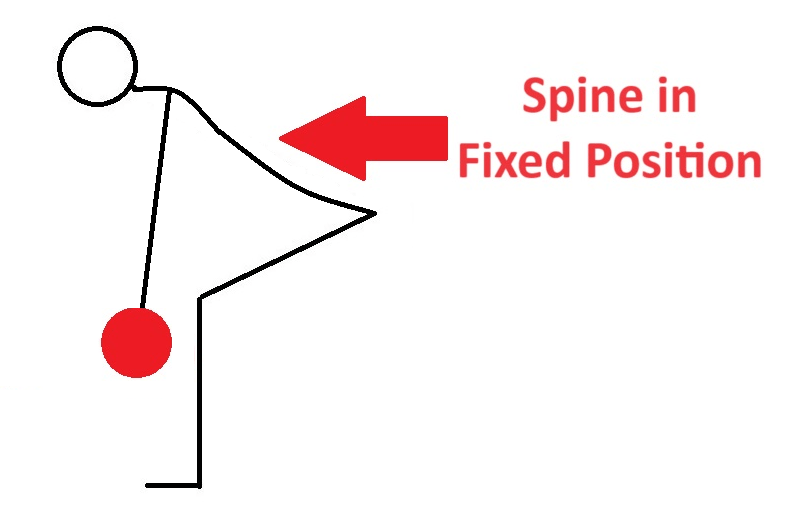
In a bent over row the back should again be supporting the move but not moving itself, instead offering stability as you lift the weight.
A good way to ensure your spine isn’t bending in the wrong places is to practice hinging at the hips using a mobility rod (and something like a broom handle works just as well). We’ve demonstrated how to do that in this video:
For moves where you’re lying down, such as a bench press:
- You should again keep the spine in its neutral position so that a particular section of it doesn’t end up taking more weight than it should.
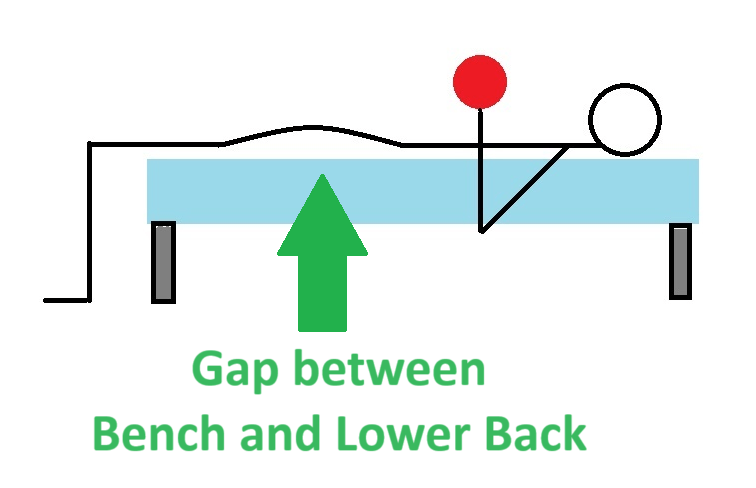
For example, in a bench press you’re working the chest and arms so shouldn’t really be feeling it in your back; if you flatten your lower back down onto the bench you’re unnecessarily bringing it into use and forcing it to take some of the strain when it shouldn’t be, hence it being safer to maintain the natural curve in the lower back during this exercise. There should be a gap between the lower back and the bench.
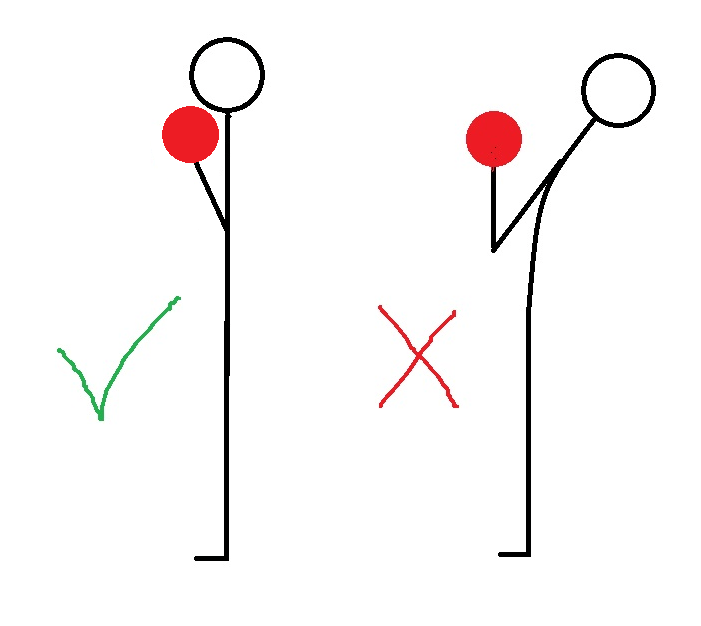
For moves where you’re standing up to perform a move that doesn’t involve the torso moving, such as a bicep curl or lateral raise:
- The torso is there to support the move you’re doing, so you should perform it without leaning forward or bending your back.
Note: whilst it’s generally a good idea to maintain the curve in the spine, it’s worth noting that there are some exceptions to this: in a crunch, for example, you will need to flatten your lower back (lumbar spine) onto the floor in order to lift your torso off the ground, but the reason this move is an exception is because a crunch is a move where bending your spine is an integral part of performing the exercise rather than being something to avoid.
You can find out more about the structure of the spine and correct spinal position during exercises here.
Check Your Foot Placement
- When performing a move that involves standing up you’ll generally want to have your feet shoulder width apart and pointing slightly outwards. Some people have an inclination to point their feet out further so it’s a good idea to correct this, as it is with those whose feet are completely parallel to each other.
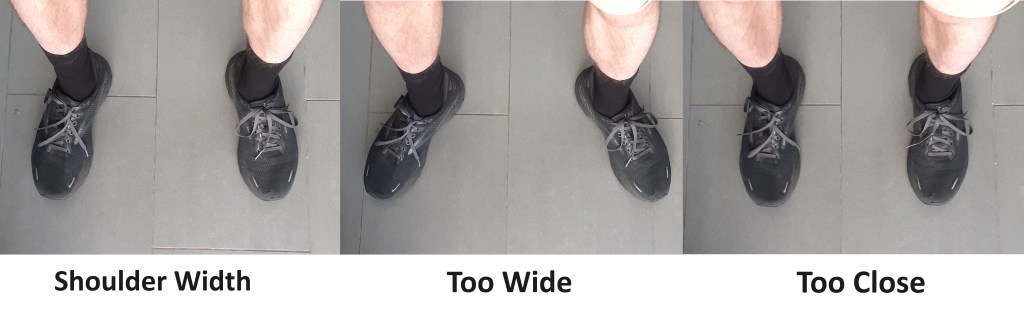
The reason for this is usually that you want your feet to be pointing in the same direction that your knees will travel when performing moves such as a squat, but it can also be to provide stability, such as in a lateral raise.
- You should also ensure that the body’s weight is evenly distributed across the feet rather than leaning disproportionately onto the heels or toes.
Foot placement is also important in moves where you’re not standing up. For example, in a bench press you should plant your feet on the floor so you don’t slip off the bench, so in this case your feet are there to provide stability.
Exceptions to this rule include calf raises (which are normally performed with the feet together and involve putting all your weight on your toes during the lifting phase) and certain variations on squats and deadlifts such as a sumo squat (where your feet are further apart).
Still, as with spinal position it’s a good idea to get into the habit of ensuring your foot placement is correct even in moves where it’s not so important.
Ensure the Muscles You’re Trying to Target Are the Ones Doing the Work
It’s true that when you first start going to the gym you may struggle to properly identify which muscles are being worked, as everything will be aching during a move (and almost certainly after), but it’s a good idea to get into the habit of developing an awareness of which muscles are being engaged, something that will become easier with time.
There’s an important safety reason for this, chiefly that if a move is performed incorrectly then muscles you’re not targeting may end up getting involved when they shouldn’t be, which can lead to injury.
In a bicep curl you should, obviously, be feeling it in the biceps. If you’re feeling it in the shoulders then that’s probably okay because those muscles perform a stabilising role, but if you’re feeling it in the back then that’s not so good and probably means the weights are too heavy and you’ve ended up overcompensating by rotating and twisting your torso to help you lift them.
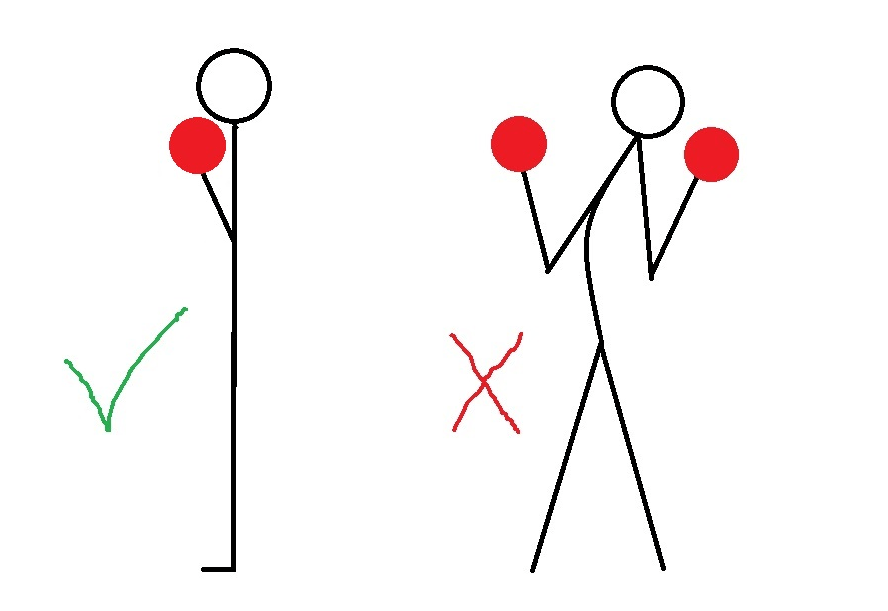
This brings a risk of injury, so just lower the weights and don’t raise them again until you’ve got the form correct.
Perform the Moves Under Control
When you start out it’s a very good idea to perform moves slowly and under control whilst you’re getting used to the basics and acclimatising your body to weight training.
This means your muscle memory is developed as you get used to the correct technique and your muscles become accustomed to being under tension. It’s also a safer way to perform moves, as supporting tissues such as tendons and ligaments will need time to adapt and get stronger.
Performing the moves slowly also means you avoid swinging the weights. Doing this not only means you’re not properly benefiting from the exercise (as you’re using momentum rather than your muscles) but can bring an injury risk because you can twinge something if you jerk or swing the weights up rather than lifting them under control.
Therefore, when you’re starting out, it’s safer to do things slowly. Whilst it’s true that you’ll always see people in the gym pumping out quick reps, the reason they’re doing that is to target their fast-twitch muscle fibres and develop explosive power, which is the sort of goal a more experienced gym-goer will have. For a beginner it’s much safer to focus on conditioning your muscles, laying down the foundations and working on endurance before strength or size.
Pay Attention to Your Breathing
When you’re performing moves slowly and under control (which, at this stage, you should be), it’s also a good idea to maintain an awareness of your breathing.
It’s generally seen as best practice to breathe in as you’re lowering the weight then breathe out as you lift the weight. A way to remember this is:
Exhale on the Exertion!
(Even simpler, you can just think about how you’d take a deep breath before you attempt something difficult.)
There are a couple of scientific reasons for this (breathing in before a lift means there’s oxygen in your body to go to the muscles as well as ensuring your core is braced to support you) but as a beginner it’s also a useful way to help you concentrate on performing the moves slowly and under control because the lifting and lowering phases are being performed in conjunction with the two stages of the breath.
If Something’s Hurting, Stop!
You might hear people talking about ‘pushing through the pain’ or saying something even more stupid like ‘pain is just weakness leaving the body!’ but ignore those people because they’re stupid. If something hurts then your body is trying to tell you something, so listen to it and stop. Pain is there for a reason and shouldn’t be ignored.
If something hurts during a session and you try to push through it then you not only risk making it worse but are putting yourself in danger if the muscle gives way and you end up dropping the weight on your foot or, even worse, on your head. Is any of that really worth the risk just to grind out a few more reps?!
And if something hurts before a session and you still decide to go ahead with your workout then you also risk making it worse. If I wake up with a twinge or ache I generally either skip the session or at least choose moves that don’t use the muscle or body part in question. It’s much better to lose one session than it is to push on with it, make the injury worse and end up having two weeks out of the gym, particularly when you’re older. A twenty year old might be able to get away with doing a session when they’re injured but a forty five year old probably won’t!
Okay, got all that?! Yes, it was a lot to take in but it was all there to help you start to work out safely and, trust me, after a while it will all seem like second nature…
 Functional Fitness PTS