Okay, if you’re new to this then prepare to have your mind blown. You see, when I did my Level 2 course I had vague ideas about what the skeleton does; I mean, bones are kind of like sticks that hold your body upright and get moved by the muscles, aren’t they?
Well, yes…
But there’s so much more to the skeleton! In fact, there are five main functions that the skeleton carries out, and they are:
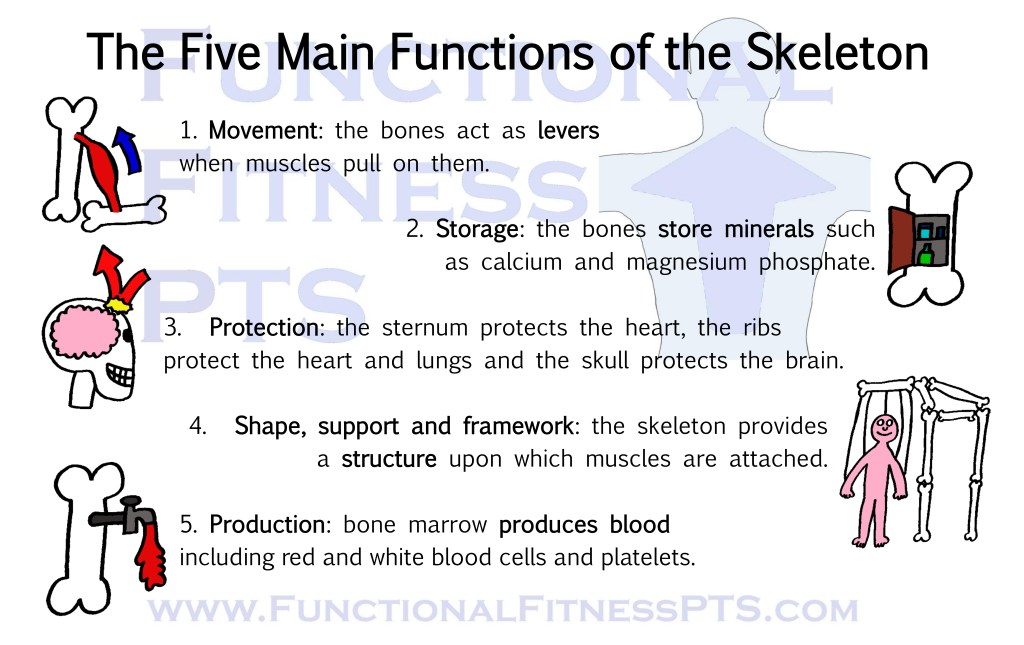
Movement
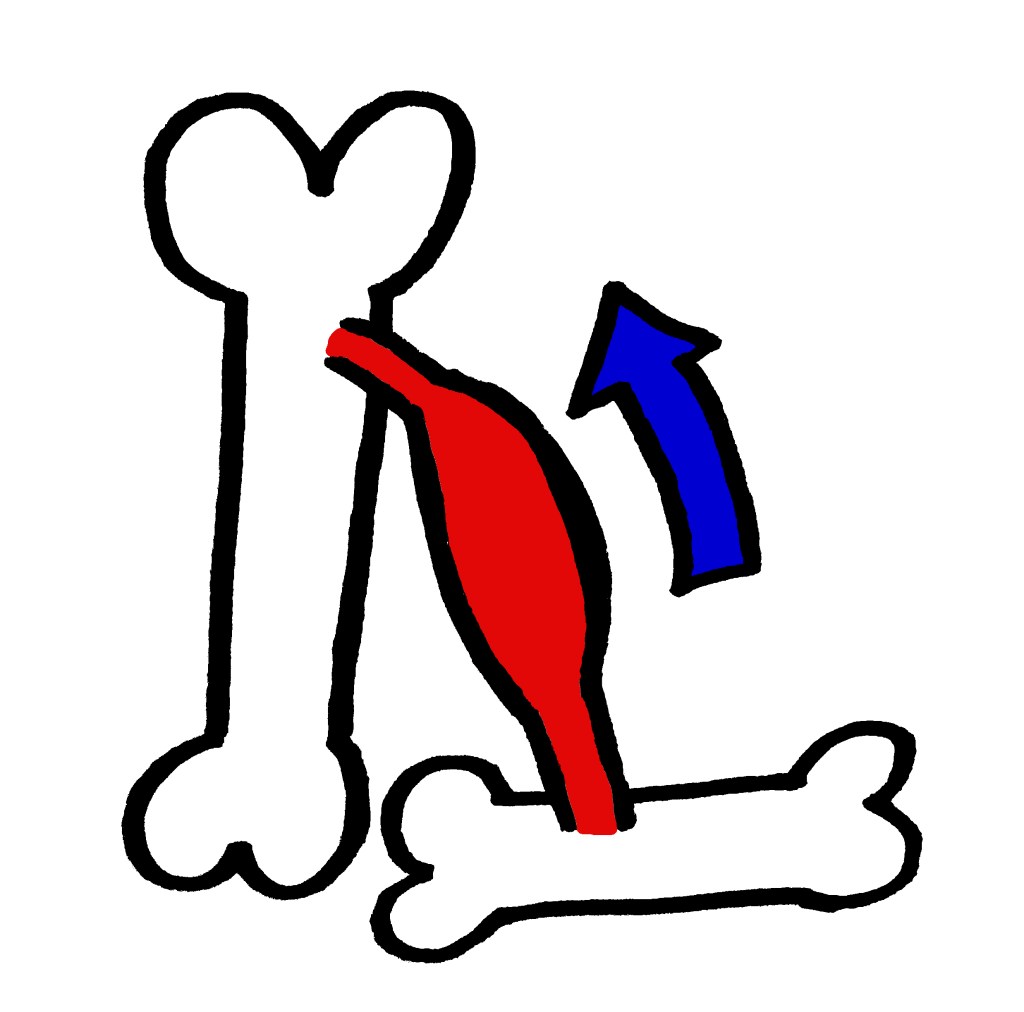
Muscles pull on bones, the joints act as levers and this allows your body to move.
For an example of this, think of your arm. The elbow is the hinge, and the bicep muscles cross from the humerus (upper arm) to the radius (lower arm). When the bicep contracts it pulls the forearm closer to the upper arm, as in a bicep curl.
Protection

Certain bones protect key organs of the body.
For example, the cranium, or skull, protects the brain and the sternum, or breast bone, protects the heart.
Shape, Structure and Framework
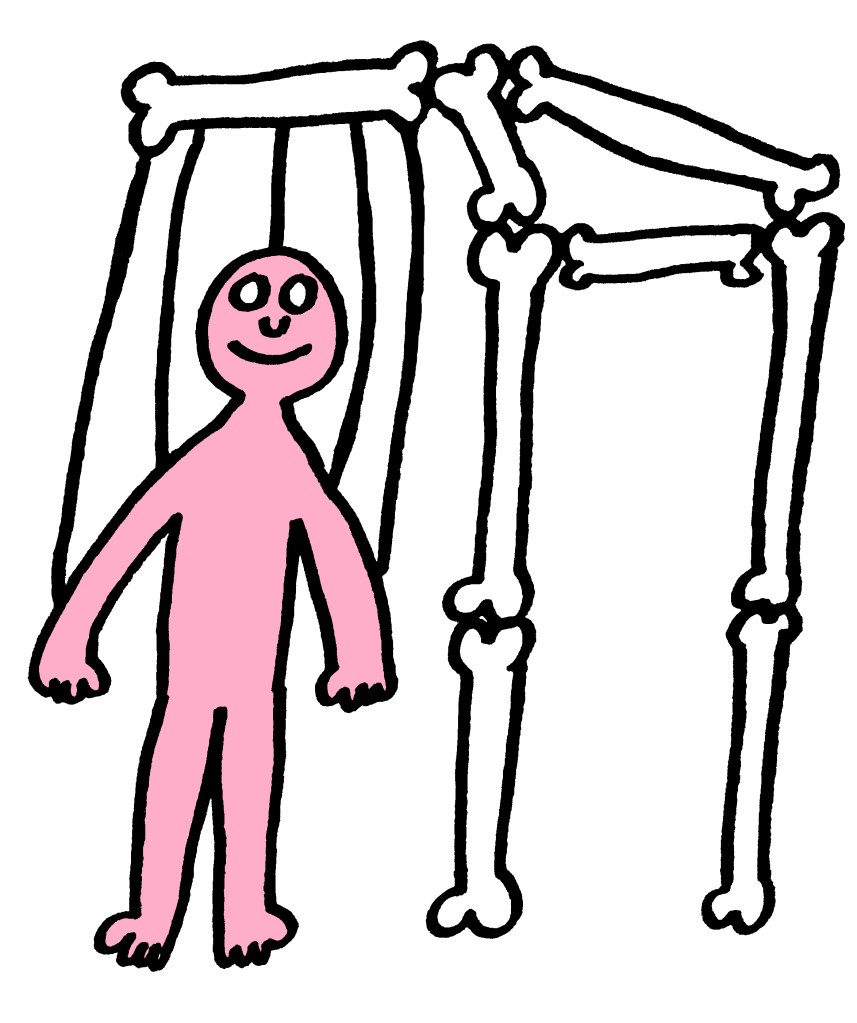
The skeleton provides the framework upon which the body is constructed.
Like the steel framework of a building, the skeleton is the foundation upon which everything else is added, such as the muscles, organs and skin.
Storage
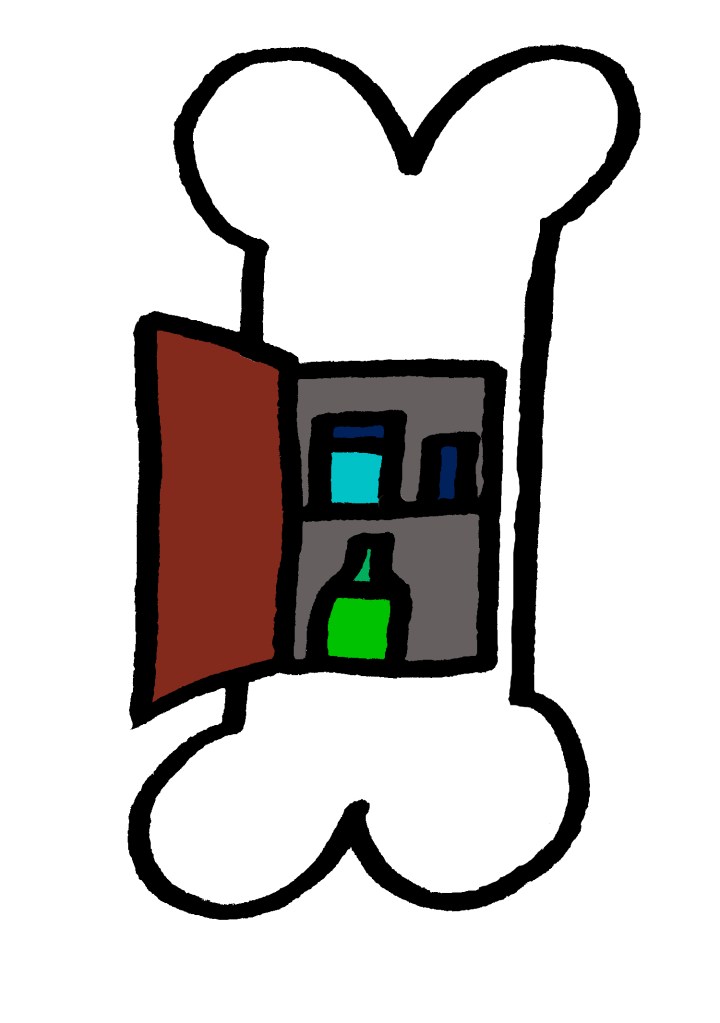
The bones act as a reservoir for minerals such as calcium and magnesium phosphate.
This is why a lack of calcium leads to weak bones, or osteoporosis. If your body has to compensate for a lack of calcium in the diet by extracting more of it from the bones than it would like, this leads to the bones themselves becoming weaker and more prone to damage.
Production
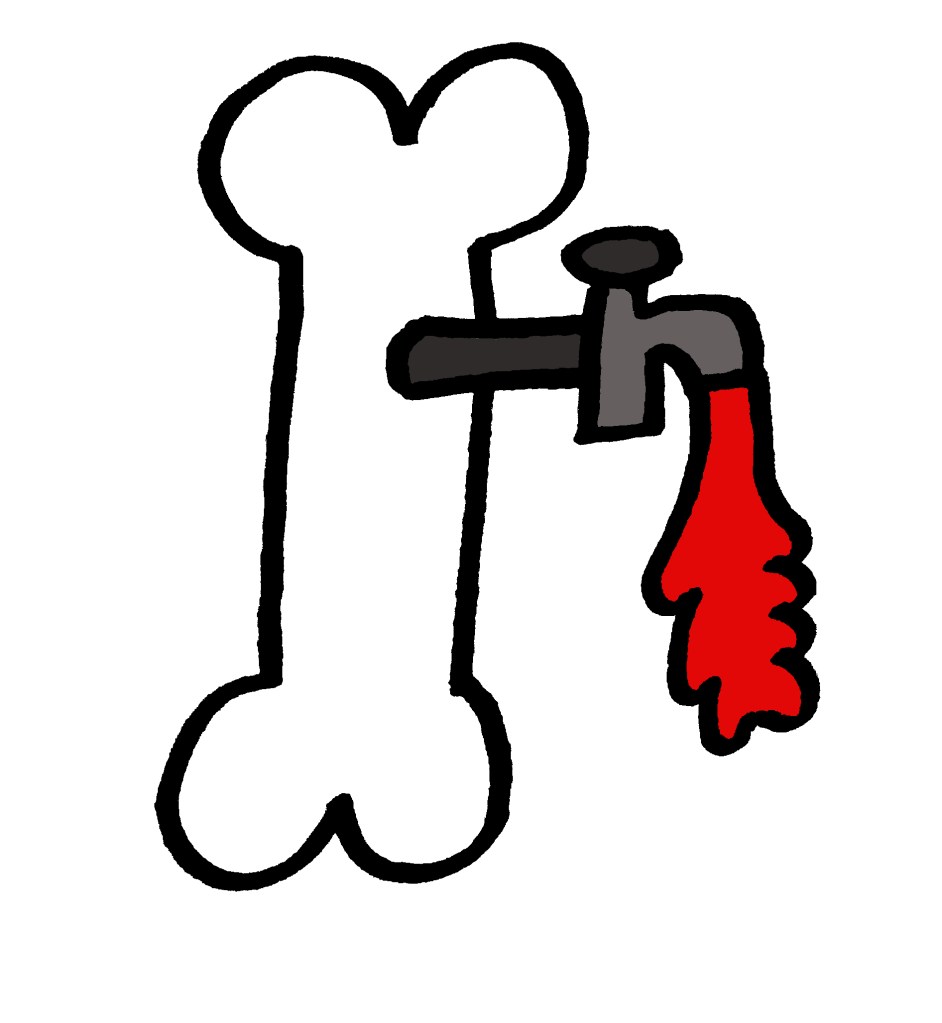
Certain bones contain bone marrow that produces red and white blood cells and platelets, meaning that bones produce blood.
Yep, that last one blew my mind. True, if you’d have asked me where blood comes from I might have vaguely replied ‘erm, the heart?’ but I’d have been wrong! So there you are. You probably intuitively knew that the skeleton is responsible for movement, protection and structure but now you know it’s used for mineral storage and blood production too!
And here’s a table that summarises what we’ve learnt…
Now we’ve covered the five main functions of the skeleton, the next article looks at: The Five Sections of the Spine
 Functional Fitness PTS