One thing you’ll need some awareness of as a personal trainer is postural deviations. Whilst it’s true that someone with more serious postural issues should be referred to a specialist, milder variants can be addressed by a personal trainer, and if you have a client who has one then it’s something you’ll need to bear in mind when planning and carrying out workouts with them.
Put simply, a postural deviation refers to any situation in which the spine is not in its preferred alignment, and has an exaggerated curve at one or more of its sections.
The Three Main Postural Deviations
There are three main types of postural deviation: kyphosis, lordosis and scoliosis.
Kyphosis
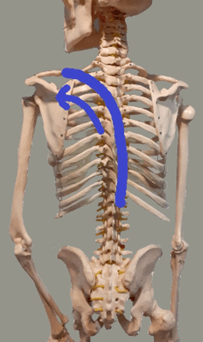
(kife – OH – siss)
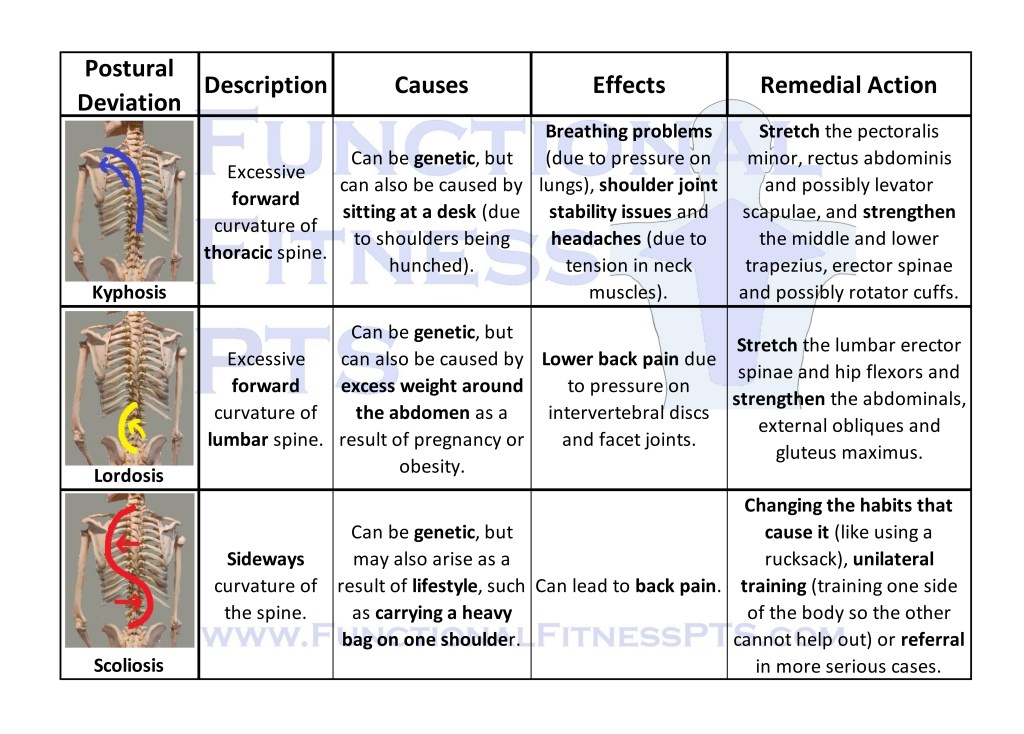
This is an exaggerated forward curve in the upper back, or thoracic spine.
It causes an individual to be hunched, with their neck and shoulders being further forwards than they should be.
It can be genetic but can also result from poor posture, such as from sitting at a desk all day.
Lordosis
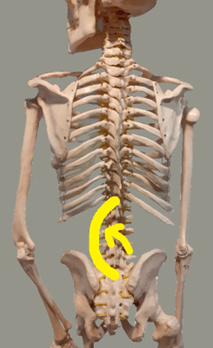
(lor – DOUGH – siss)
This is an exaggerated forward curve in the lower back, or lumbar spine.
It causes the abdomen to be pushed further out than it should be.
It generally results from an individual carrying excess weight in the abdomen area, so can arise as a result of pregnancy (in which case addressing it is something to be looked at when dealing with post-natal clients) or from having excess belly fat.
Scoliosis
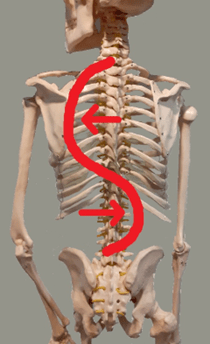
(sco – lee – OH – siss)
This is an exaggerated sideways, or asymmetrical, curvature of the spine.
It is often genetic (the skeleton of King Richard III is a famous example) but can also come about as a result of lifestyle factors. For example, carrying a heavy bag on one shoulder over a period of time can lead to a postural imbalance, as the body gradually adapts to this position.
How To Remember Which is Which
I remember it like this:
Kyphosis is higher (so the words rhyme)
Lordosis is lower and at the lumbar spine (so the letter L repeats)
Scoliosis is sideways (so the letter S repeats).
And here’s a table that summarises the three main postural deviations, as well as looking at some of the commonly prescribed methods of remedying them:
 Functional Fitness PTS